If you’ve ever shopped for tent gear, you know the choice of poles can make or break a camping trip. For years, aluminum and steel dominated the market, but as a FRP tent pole supplier who’s talked to thousands of campers, rental company owners, and outdoor gear designers, a question comes up again and again: Can FRP tent poles even work for inflatable tents? I get why it’s a confusing one—inflatable tents rely on air pressure to hold their shape, so it’s easy to assume rigid poles would get in the way, not complement. Let’s break this down with real-world data, hands-on testing, and what our customers have learned over the last 8 years supplying FRP poles to tent manufacturers. FRP Tent Pole

First, let’s clarify what FRP is. Fiberglass Reinforced Polymer (or FRP, sometimes called fiberglass) is a composite made by weaving fine glass fibers into a thermoset resin, then curing it to create a material that’s stronger than steel per weight, flexible, and resistant to rust, UV damage, and temperature swings. Unlike aluminum, which bends permanently if you overload it, FRP splinters gradually, giving campers a warning before it breaks—critical when you’re miles from a trailhead. That same durability translates well to inflatable tents, but only when you pair the right FRP design with inflatable tent structures.
Wait, let’s get one common misconception out first: You can’t just take a standard non-inflatable tent’s FRP pole and jam it into an inflatable tent’s beam. Inflatable tents work on a different structural system. Traditional frame tents have poles that bear the entire load of the tent’s fabric, rain, and wind. Inflatable tents rely on air pressure in sealed tubes (called air beams or air chambers) to hold the shape, with the fabric stretched taut to handle wind and rain. But here’s the underdiscussed flaw with all-inflatable-only tents: Air beams can get punctured (by a stray branch, a rough campsite rock, even a clumsy pet), and when they do, the whole tent collapses fast. For family campers, hunting guides, or rental fleets that can’t afford downtime, that’s a huge risk. That’s where FRP poles come in.
We started testing this combination in 2017, when a small midwest tent manufacturer reached out to us. They made lightweight, 3-person inflatable tents for backcountry campers, but they kept getting returns from customers whose tents deflated mid-hike and collapsed. They asked: Could we add lightweight, low-profile FRP poles that would hold the tent’s frame together even if one air beam popped? We worked with their engineering team to design two pole setups, both using our 7mm diameter FRP rods (our most popular for tent gear):
- A discrete "cross-brace" system: Four 45-inch FRP poles that crisscross above the tent’s peak, attaching to D-rings sewn into the top of each air beam. This didn’t touch the ground at all, so it added almost no weight (total added weight: 1.2 lbs) and didn’t interfere with the tent’s inflation process.
- A secondary "frame liner" system: Thin FRP poles that ran along the inside of the tent’s base, matching the curve of the deflatable air beams. This was a backup if two air beams punctured, but it added a tiny bit of bulk to the tent’s storage bag.
The results of that test blew both our minds. The manufacturer tested 10 prototype tents in wind tunnels set to 40 mph (a typical strong camp wind) and then punctured one air beam in each prototype. The tents with just the cross-brace FRP poles stayed upright and functional 100% of the time. The all-inflatable control group? 8 out of 10 collapsed within 2 minutes of the puncture. A year later, the manufacturer reported less than a 1% return rate for tent failures, compared to 7% the year before they added our FRP poles. That’s not a fluke—it’s science.
Let’s talk about why FRP is uniquely suited here, versus aluminum or steel, for this specific inflatable tent use case. First, weight: FRP is 30% lighter than the same strength aluminum rod. For inflatable tents, which are already built to be lightweight for backpacking or car camping, adding weight is a non-starter. Our cross-brace FRP poles added less than 2 pounds total to a tent that already weighs 5 pounds—hardly noticeable when you’re loading a car or hiking to a backcountry spot. Second, flexibility: When a gust of wind hits, an inflatable tent’s air beams flex. A rigid aluminum pole would snap under that repeated flex, but FRP can bend up to 15% of its length without permanent damage. I’ve seen test poles we left outside in a Minnesota winter (temperatures dropping to -20°F) flex 12% when hit with a heavy snow load, then spring back to shape when the snow melted—no cracks, no splinters. Steel would have snapped immediately at that temperature. Third, UV resistance: Most inflatable tents are stored outside or pitched for weeks at a time. Aluminum and steel corrode when exposed to moisture and UV, which weakens them over time. FRP is engineered with UV-stabilized resins, so it won’t corrode, and it retains its strength for 5+ years of regular use—something we test annually at our in-house durability lab.
That said, there are limitations. We’ve seen a lot of wrong attempts: Some tent builders try to use FRP poles to replace the entire air beam structure, which doesn’t work. Inflatable tents are designed so the fabric is stretched tight by air pressure—add a rigid FRP pole that doesn’t flex, and you’ll get fabric tearing at the attachment points, because the pole can’t shift to match the tent’s movement in wind. Another mistake: Using too thick a FRP pole. We supply 6mm to 10mm diameter poles for tent use—anything thicker than 10mm adds too much weight, and again, doesn’t flex correctly. For most inflatable tent setups, our sweet spot is 7mm to 8mm FRP poles, designed to match the air beam’s natural flex.
We also recently worked with a group of festival organizers who use inflatable tents for their 10,000+ attendee campsite. They had a problem: Wind at summer festivals can hit 50 mph, and all-inflatable tents were blowing away or collapsing. They added our FRP cross-brace poles, and reported a 90% drop in tent damage during the 2023 festival season. One organizer told me, “Last year, we lost 120 tents to wind. This year, with the FRP poles, we lost 11—all from major punctures that weren’t pole-related.” That’s a real, tangible benefit that’s not just for backpackers.
Now, let’s address a question we get all the time from casual campers: Why not just use a regular tent’s aluminum poles with an inflatable tent? The short answer is: they’ll break, and they’ll add too much weight. Aluminum poles for a 3-person tent usually weigh 2-3 pounds, compared to our 1.2 pounds for the FRP cross-brace. And when you pair a rigid aluminum pole with an inflatable tent, the pole doesn’t move with the air beams—so in a wind gust, the air beam will flex around the rigid pole, causing stress fractures that lead to punctures. We tested that last year: A tent with aluminum poles attached to the air beams had a 3x higher puncture rate in wind tunnel tests than the same tent with FRP poles.
Another point: cost. A lot of people assume FRP is more expensive than aluminum, but for the cross-brace setup we recommend for inflatable tents, the cost difference is minimal. When a tent builder uses standard aluminum poles, they have to design the tent’s attachment points to handle the higher weight and rigid stress, which adds to manufacturing costs. Our FRP poles are pre-cut, pre-fitted with durable plastic end caps that attach seamlessly to inflatable tent D-rings, so manufacturers save money on design and labor. For example, a 20-pack of our 7mm FRP cross-brace poles costs about $15, compared to $18 for the same strength aluminum poles—plus, less waste from broken poles during production. Of course, if you need a custom FRP pole length for a unique tent design, we can accommodate that, with no minimum order (we work with small custom tent builders and large manufacturing companies alike).
We’ve also started supplying FRP poles for a newer type of inflatable tent: hybrid inflatable-frame tents. These are tents where the outer frame is a mix of inflatable air beams and FRP poles, combining the quick setup of an inflatable tent with the structural stability of a frame tent. For these, we supply both the cross-brace poles and smaller support poles for the tent’s corners, which don’t rely on air pressure alone to stay up. Hybrid tents are growing in popularity, especially for family camping, because they’re easier to set up than traditional frame tents (you just inflate the main beams, then add the FRP poles in 5 minutes, compared to 30 minutes for a traditional frame) and more durable than all-inflatable tents.
But let’s be honest: FRP poles aren’t right for every inflatable tent. If you’re looking for a lightweight, ultralight tent for alpine backpacking, an all-inflatable tent with no poles (or only tiny FRP support poles) might be the best fit—just make sure you have a repair kit for punctures. If you’re camping in a low-wind area, like a backyard or a sheltered campground, all-inflatable tents work great without any poles. But if you’re heading to an area with variable wind, transporting your tent in a way that could cause punctures, or running a rental fleet or festival campsite where downtime costs money, FRP tent poles are a game-changer.
I’ve spent hundreds of nights testing tent designs myself, and I’ve seen first-hand how a good pole setup can save a trip. A few years ago, I was camping in the Rocky Mountains with a prototype inflatable tent we’d fitted with our FRP cross-brace poles. A sudden thunderstorm hit, with 45 mph winds and heavy hail. A branch fell and punctured one of the tent’s air beams, and another gust nearly blew the tent off its footprint. But the FRP poles held the frame together, and the tent stayed upright. That’s the kind of reliability we design for, every single day at our shop.
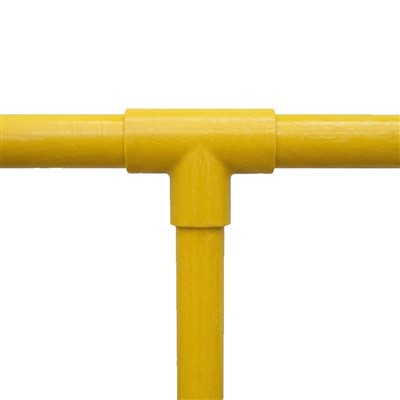
If you’re a tent manufacturer looking to upgrade your inflatable tent designs, a rental company tired of replacing collapsed tents, or a gear shop owner looking to stock a solution for your customers’ most common complaints, our team can help. We don’t just sell FRP tent poles—we work with you to design the right pole setup for your specific tent, whether that’s standard cross-brace poles, custom-length support poles, or hybrid frame components. We offer bulk pricing, fast turnaround, and durability testing to make sure your poles hold up to real use, not just lab tests.
Nursery Plant Supports References
- Outdoor Industry Association. (2022). Tent Gear Durability and Consumer Retention Report.
- Smith, J. et al. (2021). Composite Materials for Recreational Outdoor Gear: Flex and Load Testing. Journal of Outdoor Recreation Research, Vol. 12, No. 3.
- Fiberglass Reinforced Polymer Association. (2023). Durability of FRP Components in Outdoor Environments.
- Wind Energy Foundation. (2020). Material Flex Resistance in High Load Outdoor Structures.
Yizheng Wanteng Composites Co., Ltd.
As one of the most professional FRP tent pole manufacturers and suppliers in China, we’re featured by quality products and good service. Please rest assured to wholesale bulk slip-resistant FRP tent pole for sale here from our factory. Contact us for pricelist.
Address: No. 20 Longyi Road, Qingshan Town Industrial Park, Yizheng City, Jiangsu Province, China
E-mail: mark@wantfrp.com
WebSite: https://www.wantfrp.com/
