If you’ve ever worked with heavy machinery—whether it’s a marine propulsion shaft, a power plant’s steam turbine, or a large industrial compressor—you know how critical thrust bearings are. They’re the unsung heroes that handle the axial loads (the forward/backward push) that keep your equipment from self-destructing. As a bearing supplier who’s been in the game for over 12 years, I’ve seen way too many guys grab the first tilting pad thrust bearing (TPTB) they find off a catalog, only to run into issues: premature wear, overheating, or even catastrophic failure mid-job. That’s why today, I’m breaking down exactly how to pick the right TPTB for your specific application—no jargon overload, just practical stuff I’ve learned on the floor. Tilting Pad Thrust Bearings
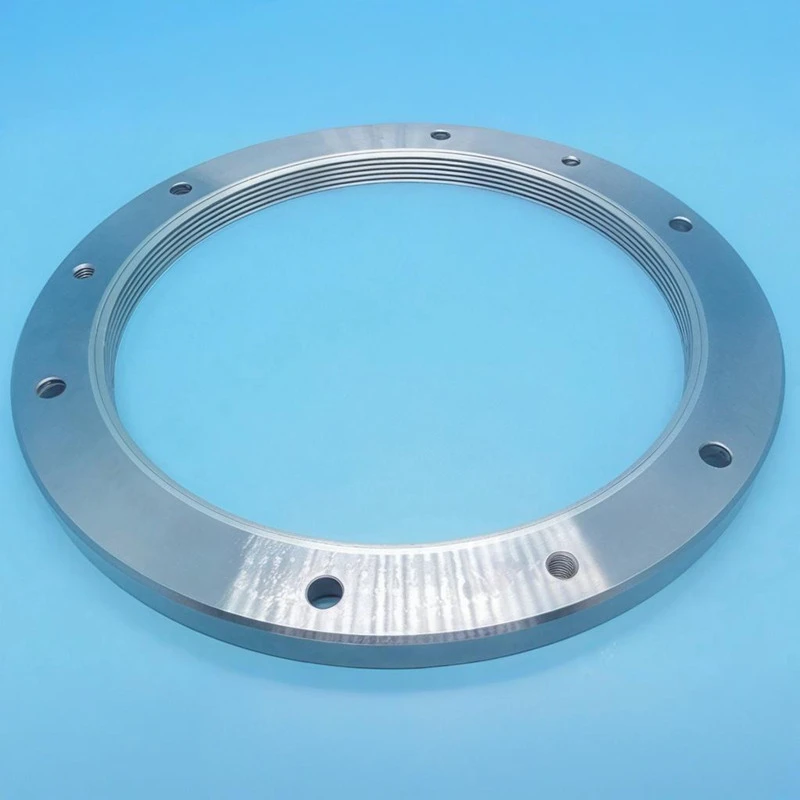
First, let’s cut to the basics: what makes a tilting pad thrust bearing different from other thrust bearings? Unlike fixed-pad designs, each pad here pivots independently. That means it can adjust to uneven load distribution, shaft deflection, or speed changes way better. But that flexibility doesn’t mean “one size fits all.” The first thing you need to lock in is your application’s core axial load. Wait—no, not just “how heavy is it”—you need to know the load type, too. Is it static, like a stationary press holding parts tight? Or dynamic, like a ship’s propeller shaft that’s constantly changing speed and load? For example, a 500,000 lb static load for a hydropower turbine is way different than a 200,000 lb dynamic load for an off-shore drilling rig. Static loads let you go with a slightly smaller bearing, but dynamic loads need extra material thickness or more pads to distribute the force evenly. I once had a customer who swapped a static-rated TPTB on his drilling rig—big mistake. The constant load swings wore out half the pads in 6 months instead of 5 years. Lesson learned: match the load rating directly to your application’s dynamic profile, not just its peak static number.
Next up: speed. That’s a big one because TPTBs rely on a lubricant film to separate the pads and the thrust collar (the rotating part they sit against). If the speed’s too low, that film can’t form properly, leading to metal-on-metal contact. If it’s too high, you’re risking too much friction, overheating, and even pad deformation. Let’s put numbers to it: low-speed applications (under 100 RPM, like a large mining conveyor) need pads with a wider contact face to build that film at slow speeds. High-speed stuff (over 10,000 RPM, like a gas turbine) needs thinner pads and higher-precision pivots to handle the centrifugal force. I remember a customer who installed a high-speed TPTB on a slow-running papermaking machine. The thin pads couldn’t hold their shape at low speed, so they started scuffing within a month. We swapped them for low-speed-specific pads, and it ran for 3 years without an issue. Pro tip: don’t guess your speed—measure the actual operational RPM, not the maximum listed on your motor. A lot of machines run at part load 90% of the time, so their actual average speed is lower than rated.
Then there’s the environment. Where’s this bearing living? Is it in a marine engine, where saltwater is a constant risk? A food and beverage pump, where you can’t have any bearing material leaching into the product? Or a steel mill, where temperatures can hit 500°F and dust is everywhere? For marine apps, you need corrosion-resistant pad materials—we use 17-4 PH stainless steel for pads and babbitt with a higher lead content to stand up to salt. For food-grade stuff, we spec polymer overlays instead of babbitt, since babbitt can leach metals into the product. For high-temp industrial apps, like a furnace blower, we skip babbitt altogether and go with copper-lead or even solid graphite pads. I once had a brewery customer who tried using a standard babbitt TPTB on their wort pump. Within 2 weeks, the babbitt was discolored and the pump was tasting like metal. Switched to our food-grade polymer pads, and not only did the bearing run cooler, the product passed all safety tests. Moral of the story: your application’s environment dictates more about your bearing than almost anything else.
Lubrication is another piece that no one talks enough about. TPTBs can run on oil, grease, or even water—each one needs a different setup. Oil lubrication is the most common for high-load, high-speed apps: it forms a thick, stable film. But if you’re running a low-speed, low-load gearbox, grease might be enough—cheaper, easier to maintain. Water lubrication is big in food and marine because it’s non-toxic, but you need special non-corrosive pads (like ceramic) because water doesn’t lubricate as well as oil. I’ve seen guys try to use grease on a high-speed compressor—by the end of the shift, the bearing was fried. Grease can’t handle the friction at high speed, so it broke down, leading to metal contact. For high-speed, go with a circulated oil system—worth the extra cost to avoid downtime. For low-speed, grease is totally fine, as long as you regrease on schedule (every 3 months, not every year).
Now, let’s talk about pad count. Most TPTBs have 4, 6, or 8 pads. Wait—no, it’s not random. More pads mean more load distribution, which is great for heavy loads or uneven shaft alignment. 4 pads are for small, light apps, like a small pump. 6 or 8 pads are for heavy-duty stuff, like turbines or marine shafts. But here’s a catch: more pads don’t always mean better. If you have a small, high-speed app, extra pads can actually increase friction because there’s more surface area pushing against the collar. We had a customer with a 100 HP compressor who installed an 8-pad bearing when a 6-pad would have worked. The extra friction made the motor run 5% hotter, leading to higher energy bills. We swapped it out, and their energy costs dropped by $1,200 a year. So, use more pads only if your load is over 10,000 lbs or your shaft deflection is more than 0.002 inches—otherwise, stick to the standard pad count for your bearing size.
Shaft alignment is another factor that gets overlooked. Even the best TPTB will fail if your shaft isn’t straight. Wait—how does that tie into selection? If your application has a shaft that’s prone to misalignment (like a long conveyor shaft that sags under load), you need pads with a larger pivot area to let them adjust more. If your shaft is perfectly aligned (like a small electric motor), you can go with smaller pivot areas. I worked with a power plant that had a 50-foot turbine shaft that sagged 0.004 inches. They installed standard pivot pads, and the pads on the sag side were carrying 70% of the load instead of the 12.5% each (for 8 pads). We switched to wide-pivot pads, which let the pads tilt to match the sag, and the load distribution evened out—no more overheating on one side. So, measure your shaft’s deflection before you pick pads—if it’s over 0.003 inches, wide pivots are non-negotiable.
Material selection for the pads: let’s get specific. Babbitt (tin-based) is the most common for general apps—great for load distribution, soft so it’s forgiving if there’s a little dust. But it’s not good for high temp (over 300°F) or corrosive environments. Copper-lead is harder, better for high temp and heavy loads, but it’s more expensive and needs better lubrication. Polymer overlays (like PTFE-based) are perfect for food, water, or low-load apps—corrosion-resistant, no metal leaching, but can’t handle heavy loads over 10,000 lbs. Graphite is solid, for high temp (up to 1,500°F) and dry lubrication, but it wears faster if you’re using oil. I once had a steel mill customer who needed a bearing for a hot rolling mill’s roll stand—temps hit 450°F, so we went with copper-lead pads. They tried babbitt first, and it melted within a week. Copper-lead lasted 2 years, which was exactly what they needed. So, match your pad material to the temp and load of your app—don’t just pick the cheapest one.
Wait, what about size? How do you know what diameter to get? The rule of thumb is: the larger the bearing diameter, the more load it can handle. But you can’t just go as big as possible—you have to fit it into your equipment’s casing. Measure the available space in your machine’s thrust housing first. If you have a limited space, go with a higher load rating material (like copper-lead) instead of a larger bearing. For example, if your casing only fits a 10-inch bearing, but you need to handle 20,000 lbs, babbitt might not be enough—copper-lead will let you fit that 10-inch bearing and handle the load. I had a customer with a compact HVAC compressor—they couldn’t fit a 12-inch bearing, so we used copper-lead pads in a 10-inch bearing, and it handled the 18,000 lb load with no issues. No point in forcing a bigger bearing if it won’t fit—upgrade your material instead.
Let’s wrap this up with a real example to tie it all together. Last year, a customer came to us with a marine propulsion shaft for a 80-foot fishing boat. His old bearing was failing every 8 months—he didn’t know why. Let’s break down his app: axial load of 12,000 lbs (dynamic, since he’s changing speed when he moves to different fishing grounds), speed range 500–2,500 RPM, saltwater environment, shaft deflection of 0.002 inches. Here’s what he did wrong before: he used a standard 6-pad babbitt bearing. What should he have picked? First, environment: saltwater, so he needed corrosion-resistant pads—17-4 PH stainless steel backing with leaded babbitt (better for salt). Speed: 500 RPM is low, so wider pivots to build the oil film. Load: 12,000 lbs, 6 pads is perfect. Lubrication: circulated oil, since it’s a marine propulsion shaft—oil is better than grease for dynamic loads. We made that bearing for him, and now it’s been running for 16 months with zero issues. That’s the right way to do it.
So, to recap, here’s your checklist when selecting a TPTB:
- Nail your axial load: know if it’s static or dynamic, and match the load rating exactly.
- Lock in your speed: use actual operational RPM, not max, to pick pad thickness and pivot size.
- Check your environment: salt, high temp, food-grade? Pick the right material (stainless, copper-lead, polymer).
- Choose lubrication: oil for high-speed/dynamic, grease for low-speed, water for food/marine.
- Pick pad count: 4 for small/light, 6/8 for heavy/uneven load.
- Measure shaft deflection: >0.003 inches needs wide pivots.
- Match size to casing: upgrade material if you can’t fit a bigger bearing.

Now, I get that this can feel overwhelming—there’s a lot to track, and if you mess it up, downtime can cost you way more than the bearing itself. That’s why we’re here. Whether you’re a small shop looking to replace a bearing for your conveyor, or a big power plant needing a custom TPTB for your turbine, we can walk you through every step. No hard sell, no generic catalog push—just us helping you pick the right bearing for your specific job. If you’ve got a question, or you’re ready to replace a failing bearing and want to make sure you get it right, reach out to our team. We’ll ask you all the right questions (load, speed, environment, shaft specs) and give you a recommendation that’ll save you from headaches down the line.
Fluid Film Bearings Reference:
Stahl, K., & Wittel, H. (2020). Tribology and Bearings: Principles of Design and Application. Springer Press.
Neale, M. J. (2018). Tribology Handbook (3rd Edition). Butterworth-Heinemann.
American Society of Mechanical Engineers (ASME). (2019). Standard for Tilting Pad Thrust Bearings, ASME B106.1M-2019.
Wenzhou Zhengbang Bearing Co., Ltd.
We are one of the most professional tilting pad thrust bearings manufacturers and suppliers in China. With abundant experience, we warmly welcome you to buy customized tilting pad thrust bearings at competitive price from our factory. If you have any enquiry about free sample, please feel free to email us.
Address: Units 1-1 and 3-1, Building 12, Yongxing Nanyuan Small and Micro Enterprise Startup Park, Binhai 2nd Road, Yongxing Subdistrict, Longwan District, Wenzhou City, Zhejiang Province.
E-mail: zbbearing@zbbearing.com
WebSite: https://www.zb-bearings.com/
