If you’re working in industrial automation, process control, or even HVAC systems, you’ve probably relied on a pressure transmitter at some point. But here’s a question that doesn’t come up as often as it should: what’s the deal with its humidity resistance? As someone who’s been supplying pressure transmitters for over a decade, I’ve lost count of how many times a customer has called me panicking because their unit failed in a damp environment—condensation buildup, high ambient humidity, maybe even occasional rain. That’s why humidity resistance isn’t just a spec on a datasheet; it’s what separates a transmitter that runs for 5+ years from one that dies in 6 months. Let’s break this down like we’re chatting in a break room, no jargon overload. Pressure Transmitter

First, let’s get the basics straight: humidity resistance for a pressure transmitter is its ability to keep working accurately, and not corrode, when exposed to moisture in the air. Not all moisture is the same, though. There’s high ambient humidity (like 95% RH in a paper mill or food processing plant where steam’s constantly running), condensation (when a cold transmitter hits warm, humid air—hello, pipe surfaces and outdoor installs), and even occasional direct water exposure (like a transmitter on a wastewater plant aeration tank). Each of these puts different stress on the device, and that’s why a one-size-fits-all spec doesn’t cut it.
I see so many customers skip over this spec when buying a transmitter—they fixate on pressure range (0-100 psi, 0-10 bar) or output signal (4-20 mA, HART), and just check the “humidity” box for “standard.” But here’s the thing: standard humidity resistance (usually around 85% RH at 40°C, no condensation) works for dry labs or air-conditioned control rooms. Put that same unit in a brewery’s fermentation room, where humidity hovers at 98% and the temperature swings 10°C every hour? You’re gonna have issues. Most failures I’ve fielded early on weren’t from pressure overload—they were from moisture seeping into the housing, shorting the circuit board, or corroding the pressure sensor diaphragm.
Let’s talk about how transmitters handle moisture, because that’s where the real engineering happens. Every good pressure transmitter has a hermetically sealed sensor core—meaning the sensitive parts (the diaphragm, the piezoresistive elements that turn pressure into an electrical signal) are sealed inside a housing that doesn’t let water or vapor in. But “hermetic” isn’t a guarantee, especially for budget models. The housing’s O-rings, cable glands, and vent filters are the weak points. Wait, vent filters—yeah, I know, they sound counterintuitive. Transmitters need a vent to equalize pressure between the inside and outside of the housing, so changes in atmospheric pressure don’t throw off readings. But that vent also lets moisture in if it’s not a special desiccant vent filter. A desiccant filter absorbs water vapor, so air can pass through, but moisture can’t build up inside the housing. That’s a key feature I push to customers—skip the basic vent, go for a desiccant one, especially for high-humidity environments.
Then there’s the material of the housing itself. Stainless steel is common, but not all stainless is the same. 316L stainless is better than 304 for corrosive moisture—like in chemical plants where humidity has trace amounts of acids or salts. Plastic housings might work for low-humidity indoor uses, but they can’t handle UV or extreme condensation, so outdoor or coastal installs? Stick to metal. I had a customer a few years back who installed plastic-housed transmitters on a coastal jetty—within 3 months, the housing was cracking and corroding from salt humidity. Switched to 316L units, they’ve been running fine ever since.
Now, let’s get into the failure modes that matter. When moisture gets into a transmitter, the first thing that usually happens is condensation on the sensor diaphragm. That distorts the diaphragm’s shape, so it doesn’t measure pressure accurately—you’ll get noisy readings, or readings that drift over time. Next, if moisture hits the circuit board, it can cause a short circuit, which kills the unit outright. Even worse, if there’s salt in the humidity (like in a marine setting), it can start corroding the metal traces on the board or the sensor’s internal connections. Corrosion is a slow killer—you might not see it for a year, but by then the sensor’s already degraded beyond repair.
I want to clarify a common misconception: humidity resistance isn’t just about high RH numbers. It’s also about temperature cycling, because that’s what causes condensation. Let’s say a transmitter is installed outside, where the temp drops to 0°C at night, then jumps to 30°C during the day. The cold housing cools the air inside, which condenses into water. If the desiccant filter can’t keep up with that rapid moisture buildup, you get a pool of water inside the housing. That’s why units designed for outdoor high-humidity use have to pass a temperature cycling test with humidity—usually -40°C to 85°C, with humidity that reaches 100% RH (condensing). A lot of cheap transmitters claim “humidity resistant” but only pass the static 85% RH test, not the cycling one. I always advise customers to ask for the test details, not just the spec number.
Another point: IP ratings, which are often confused with humidity resistance. IP67, for example, means a device is dust-tight and can withstand immersion in water up to 1m for 30 minutes. That’s great if your transmitter gets splashed, but it doesn’t tell you how it handles sustained high humidity or condensation. A transmitter could be IP67 but fail a 100% RH cycling test in 2 weeks. So don’t mix those up—IP is for water ingress from direct exposure, humidity resistance is for airborne moisture over time.
Let’s talk about real-world examples. Take a food processing plant—they have washdowns multiple times a day, so humidity is high, and there’s occasional direct water. The transmitters here need to not just handle high RH, but also be resistant to water that has food oils or cleaning chemicals. I supply units with 316L housings, desiccant vents, and conformal coating on the circuit boards. Conformal coating is a thin layer of polymer that protects the board from moisture and chemicals—another feature that’s worth the extra cost. I had a customer in a cookie factory who initially used uncoated boards; after 6 months, their transmitters were failing because of sugar dust mixing with humidity on the board. Switched to coated ones, no issues since.
What about indoor high-humidity environments, like a hospital laundry room or a data center’s cooling system? Here, humidity is high but not as extreme as industrial sites, but you still need reliable readings. For these, I recommend transmitters with at least 95% RH resistance, no condensation required, and maybe a conformal coating to prevent dust buildup mixing with moisture. I’ve seen customers try to save money by using low-spec units here, but then they have to replace them every 12 months, which ends up being more expensive than buying a good one that lasts 5 years.
Now, how do you choose the right humidity resistance for your application? Let’s walk through a quick checklist, since I do this with every customer:
- What’s the ambient humidity in your installation? If it’s over 90% RH, go beyond standard specs. If it’s 90% and there’s temperature cycling, go for a condensing humidity rating.
- Is there corrosive moisture? Look for 316L housing, maybe a coating.
- Is the transmitter exposed to direct water? Check IP ratings in addition to humidity specs.
- What’s your downtime cost? If shutting down a process costs $10k an hour, don’t skimp on the humidity resistance.
I’ve seen way too many customers go for the cheapest transmitter, only to regret it when it fails. Last year, a chemical plant called me in a panic because their transmitters were failing every 3 months. They’d bought units from a overseas supplier that advertised “humidity resistant” for a fraction of my price. When we opened one up, there was water inside the housing—turns out the vent filter was just a plastic mesh, no desiccant, and the O-rings were made of cheap rubber that degraded in 6 months. Switched to my units, which have desiccant filters and EPDM O-rings that handle high humidity and chemicals, they’ve had zero failures since.
So here’s the bottom line: humidity resistance isn’t a “nice-to-have” feature, it’s a critical one for any transmitter that’s not in a controlled, dry environment. It’s not just about surviving moisture—it’s about keeping accurate readings, which is the whole point of a pressure transmitter. If your readings are off because of moisture, you might end up with overpressure in a pipe, a process shutdown, or even safety hazards. That’s not worth cutting corners for.
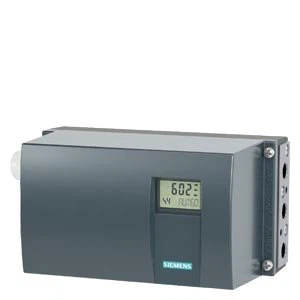
Now, if you’re out there looking for a pressure transmitter that’s built to handle whatever humidity your environment throws at it—whether it’s a damp basement, a coastal industrial site, or a washdown-heavy food plant—we’ve got you covered. We build our transmitters with desiccant vents, corrosion-resistant materials, and conformal coatings, and we test every unit for humidity resistance under real-world conditions, not just in a lab. No cheap gimmicks, just reliable performance that lasts. So if you want to chat about your application, figure out the right humidity spec for your needs, or get a quote, reach out to us. We’re here to help you avoid those unnecessary failures and keep your processes running smoothly.
Temperature Transmitter References
- Process Pressure Measurement: Humidity and Corrosion Effects, ISA – International Society of Automation, 2022.
- Pressure Transmitter Environmental Testing Standards, IEC 60770-2:2019, International Electrotechnical Commission.
- Conformal Coating Guidelines for Industrial Electronics, NEMA Standard IEC 60068-2-60, National Electrical Manufacturers Association.
- Humidity Resistance for Industrial Sensors, Control Engineering Magazine, Vol. 45, No. 12, 2021.
Iges Instrument Co., Ltd.
With abundant experience, we are one of the most professional pressure transmitter suppliers in China. Please feel free to buy high quality pressure transmitter in stock here and get quotation from our factory. Good service and low price are available.
Address: No. 103, 1st Floor, Dacheng Commercial Building, Chezhan Avenue, Lucheng District, Wenzhou City
E-mail: igesinst@gmail.com
WebSite: https://www.iges-inst.com/
