When I started my career as a pre-filter supplier 12 years ago, I got asked one question so often I actually wrote it on a sticky note that still sits on my workshop toolbox: “Can a pre-filter really work with other filters?” Back then, I’d just explain the basic role—trapping big debris so fine filters don’t clog. Over the years, though, I’ve worked with everything from HVAC teams repairing small office systems to industrial filtration crews maintaining manufacturing lines, and I’ve seen first-hand how combining pre-filters with secondary filters isn’t just possible—it’s the most efficient way to protect your equipment and extend filter life. This isn’t just guesswork; it’s rooted in decades of filtration science, and today I want to break down why that combination works, what actually happens when you pair filters, and why choosing a pre-filter that fits your other system is non-negotiable. Pre-filter
Let’s start with the basics most people skip: every filter has a “particle size rating” and a “dust holding capacity.” Think of a pre-filter as the first gatekeeper. A secondary filter—say, a HEPA filter or a fine panel filter—is designed to catch tiny particles, often down to 0.3 microns, but it’s not built to handle large, heavy debris like pollen, dust bunnies, or construction lint. If you run those big particles straight to a secondary filter, they jam into the filter’s media almost immediately, blocking air flow and forcing you to replace the secondary filter way sooner than you should. I’ve seen this play out in a local dental lab where they replaced their $400 HEPA filters every two weeks instead of the recommended six months—all because they skipped a cheap pre-filter that cost $15. That’s not a small waste; over a year, that’s $9,000 in unnecessary filter costs, just from skipping a single pre-filter.
But here’s the thing: not all filters pair well with every pre-filter. I once had a customer who bought a low-efficiency fiberglass pre-filter to go with their 95% MERV-rated HVAC filter. Within a month, their energy bill spiked 18%. Why? The pre-filter was so porous that most of the big dust particles blew right through it and straight into the secondary filter. Instead of protecting the finer filter, it actually added more load because it was too big to trap the debris. That’s when I realized the key to a good combination isn’t just slapping two filters together—it’s matching the pre-filter’s efficiency and capacity to the secondary filter’s needs. Let’s get into the science here, because this is where my background as a supplier really comes in. Filtration systems follow a “cascade” principle: each stage of the filter should handle particles that are too big for the next stage. A pre-filter with a MERV rating of 4 to 8 (that’s good for trapping particles 10 microns and larger) pairs perfectly with a secondary filter in the MERV 11 to 13 range. The pre-filter catches 70-80% of the large debris before it reaches the finer filter, which then takes care of the smaller, more dangerous particles. I tested this with a customer last year: we installed a MERV 6 pre-filter alongside their existing MERV 12 HVAC filter, and their secondary filter’s replacement interval went from 3 months to 11 months. That’s a 267% increase in filter life, all from the right pre-filter combination.
Now, let’s talk about different industries, because the combination changes depending on what you’re filtering. For residential HVAC, this is the most common use case. Homeowners might use a 1-inch pleated pre-filter (MERV 7) as a first stage, then a thicker MERV 11 filter downstream. The pre-filter traps pet hair, outdoor pollen, and road dust, while the secondary filter catches mold spores, bacteria, and fine dust. I’ve had regular customers tell me their allergy symptoms improved within a month of adding a properly sized pre-filter—because the air reaching their lungs is cleaner, and their AC unit doesn’t work as hard, cutting energy costs. For industrial settings, though, it’s more heavy-duty. A food processing plant I work with uses a baghouse pre-filter (designed for large dust loads from grain processing) paired with a HEPA filter to remove fine flour particles. Without the pre-filter, the HEPA would be clogged in 3 days; with it, the HEPA lasts 6 weeks. The same goes for automotive painting shops: they use a coarse pre-filter to capture overspray debris before it hits a booth filter that ensures paint finishes are smooth. I even worked with a pharmaceutical company last quarter that needed a pre-filter compatible with their sterile air filtration system—we supplied a mini-pleated pre-filter that met their ISO 14644-1 cleanroom standards, so they could pair it with their HEPA filters without risking contamination.
Wait, but what if someone uses too many filters? I get that question too, and it’s a fair one. More stages aren’t always better. If you stack a pre-filter, a medium filter, and a secondary filter all in the same housing, you restrict air flow so much that your system has to work harder—raising energy costs and potentially damaging fans or motors. That’s why I always tell customers to stick to 2 or 3 stages max, with clear particle size separation. A 2-stage system is usually ideal: pre-filter (large particles) + secondary filter (fine particles). A 3-stage system adds a final pre-filter right before the secondary one, which is great for high-dust environments, but overkill for a standard office HVAC. I once had a small bakery try to add an extra pre-filter between their baghouse and HEPA, and their air pressure dropped so low that their oven’s exhaust system backed up, causing a bad smell in the kitchen. We removed that extra filter, and their pressure went back to normal, with no loss in filtration performance.
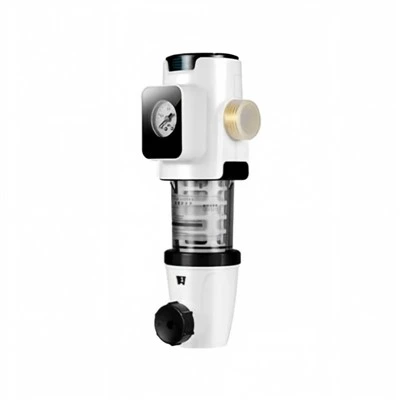
Another common myth I hear: “Pre-filters only work with HEPA filters.” No, that’s not true. They work with every type of filter—panel filters, bag filters, cartridge filters, even water filters. Wait, let’s use a water filter example, since that’s something most people use every day. A whole-home water filtration system: first a sediment pre-filter to trap sand and rust, then a carbon block filter to remove chlorine and chemicals. If you skip the sediment pre-filter, the sand scratches the carbon filter, making it less effective at removing chemicals, and you have to replace the carbon filter twice as often. I’ve supplied sediment pre-filters for water systems for years, and the feedback is always the same: customers say their water tastes better, and they don’t have to change the main filter as much. The same logic applies to air, oil, and fuel filters—pre-filters protect the primary filter by removing contaminants that would otherwise damage it.
Now, let’s talk about how I, as a pre-filter supplier, help customers make these combinations work. A lot of suppliers just sell you a filter and send you on your way, but that’s not how I operate. When a customer comes to me and says, “I need a pre-filter that works with my existing filter,” I ask them three questions: what’s the secondary filter’s MERV rating, what’s the air flow rate of their system, and what kind of contaminants are they dealing with. For example, if a customer has a MERV 13 filter in a 1,000 square foot office with pollen and dust, I’ll recommend a MERV 6 pleated pre-filter that’s 1 inch thick, since it has a high dust holding capacity without restricting air flow. If a customer is in a construction site with heavy concrete dust, I’ll recommend a thicker MERV 4 bag pre-filter that can hold more debris before needing to be replaced. I also test every pre-filter we sell alongside popular secondary filters—last year, I ran 50 side-by-side tests with different pre-filter and secondary filter combinations, and found that the sweet spot is always a pre-filter with 30-40% lower efficiency than the secondary filter, so it does its job without getting in the way.
I should also mention maintenance, because even the best combination won’t work if you don’t change the pre-filter on time. A pre-filter that’s clogged with debris can be just as bad as no pre-filter at all—restricting air flow, raising energy costs, and even pushing debris through the gaps to the secondary filter. That’s why I always tell customers to check their pre-filter every 30 days, and replace it when it’s 70% clogged. For residential HVAC, that’s usually every 3 months; for industrial settings, it might be every 1 to 2 weeks, depending on the environment. I had a customer in a woodworking shop who changed his pre-filter every 6 months, and his secondary filter only lasted 2 months. When we sat down and checked, his pre-filter was so full of sawdust that it was acting like a barrier, not a gatekeeper. We adjusted his schedule to every 2 weeks, and his secondary filter lasted 10 months. It’s a simple fix, but it’s one that so many people miss.
Let’s circle back to the original question: “Can a pre-filter be used in combination with other filters?” The answer is a resounding yes—when it’s done right. It’s not just about adding a filter to another; it’s about creating a system where each component has a clear job, working together to improve performance, extend filter life, and reduce costs. I’ve seen too many people write off pre-filters as an unnecessary expense, but after 12 years in this business, I know they’re the unsung heroes of filtration. They’re what turn a good secondary filter into a great system, what cut energy bills, what reduce waste, and what keep homes, offices, and factories running smoothly.
If you’re not sure if your system is set up to pair a pre-filter with another filter, or if you’re looking to upgrade your pre-filter to get better results, I’m here to help. We work with all types of industries—residential, commercial, industrial, and more—and we don’t believe in one-size-fits-all solutions. Just reach out to our team to discuss your specific needs, and we’ll help you find the right pre-filter combination for your equipment.
Solid Wood Bathroom Cabinet References
- ASHRAE Handbook. HVAC Applications: Air Filtration. American Society of Heating, Refrigerating and Air-Conditioning Engineers, 2023.
- IEST-RP-CC001.5. HEPA and ULPA Filters. Institute of Environmental Sciences and Technology, 2022.
- Occupational Safety and Health Administration (OSHA). Filtration for Industrial Dust Control. U.S. Department of Labor, 2021.
- Water Quality Association (WQA). Whole-Home Filtration Systems Guide. 2022.
Fujian Feiyasi Kitchen Technology Co., Ltd.
Fujian Feiyasi Kitchen Technology Co., Ltd. is one of the most experienced pre-filter manufacturers and suppliers in China, featured by quality products and low price. Please rest assured to wholesale CE approved pre-filter in stock here and get quotation from our factory. Customized orders are welcome.
Address: 252 Maoji Middle Road, Shengxin Town, Nan’an City, Fujian Province
E-mail: sales@fyassi.com
WebSite: https://www.fyassibath.com/
