Hey there, if you’ve ever tried shipping oversized stuff through LCL, you know it’s not just throwing a big box into a container and crossing your fingers. As someone who’s been running an LCL shipping supplier for years, I’ve seen way too many clients come in with big, bulky goods—think industrial machinery, large furniture, even custom-built event displays—and get surprised by all the hidden hoops LCL throws at you when the shipment’s too big for a standard small parcel. Let’s break down the real limitations, not the stuff you’ll see on a generic freight website, but the stuff we actually deal with day-to-day. LCL Shipping
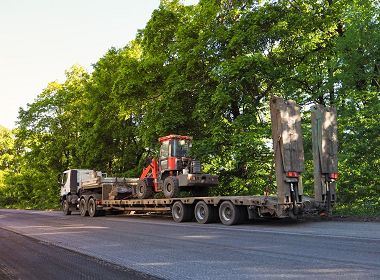
First off, there’s the whole “space allocation” mess that’s unique to LCL. LCL stands for Less Than Container Load, right? It’s when you’re sharing a 20ft or 40ft container with other shippers, instead of booking the whole thing yourself. So if your goods are oversized—say, a 10ft tall shelving unit or a generator that’s 8ft wide—they can’t just fit into the standard pallet slots most LCL consignments use. Here’s the problem: container lines book LCL space based on standard pallet dimensions and weight limits for standard cargo. Oversized goods (let’s define that as anything that’s over 48in wide, 45in tall, or 55in in length, depending on the carrier) can’t stack neatly, which messes up the entire stowage plan. We used to have a client who shipped a commercial ice machine that was 9ft long; the carrier cut their allocated space by 20% because they couldn’t stack anything on top of it, and they hit us with a “oversized stowage surcharge” that doubled their original quote. That’s not a random fee—it’s because LCL containers are packed tight, and any cargo that can’t be stacked eats into space that’s supposed to be shared with 3-5 other small shipments. Unlike FCL (Full Container Load), where you can book the whole container and arrange stowage yourself, LCL carriers dictate how space is used, so oversized cargo is a headache for them, which translates to extra costs for you.
Then there’s dimensional weight vs actual weight, but wait—this is worse for oversized goods than regular small stuff. A lot of people think “oversized = heavy,” but not always. For example, a patio set made of wicker is big, but light—dimensional weight (which is calculated by length x width x height / a standard factor, like 139 for air freight or 167 for ocean) will be way higher than actual weight. With LCL, carriers charge based on whichever is bigger: actual weight or dimensional weight. So that light, bulky oversized furniture? You’re paying for 2x the space it actually takes up. I had a client last month who shipped a dining set that measured 72in x 36in x 12in. Dimensional weight was 1,872 lbs, actual weight was only 120 lbs—they got nailed with a $450 surcharge just for the dimensional weight, which was more than their actual freight cost. That’s a big one people miss when they go with LCL for oversized goods: the dimensional weight penalty is way steeper for anything that’s wide or long, because the formula is based on overall volume. FCL lets you avoid some of that because you can pack it efficiently, but LCL doesn’t care about your efficiency—they care about how much space your cargo takes up relative to others.
Next up, handling and loading constraints. LCL shipments go through multiple hubs before they get to their destination: pickup from your warehouse, delivery to the origin port, stuffing into the container, then unstuffing at the destination port, and finally delivery to the consignee. Every single one of these steps has limitations on oversized cargo. First, pickup: most local LCL carriers use standard delivery vans or small trucks. If your oversized cargo can’t fit into a standard 12ft van (again, around 8ft wide max, 9ft tall max), you’ll need a flatbed truck for pickup. That’s another fee, obviously. Then, stuffing: the cranes at ports and the forklifts in our warehouses can only handle cargo up to a certain size. A lot of our smaller local forklifts can’t lift a 500lb oversized piece without custom rigging, which adds time and money. We had a run-in with a client who tried to ship a large hot tub—our forklift couldn’t get under it, so we had to rent a mobile crane to move it, which cost $300 just to get it into the container. And then there’s the destination side: if the consignee’s warehouse has loading docks that are too narrow or can’t handle the size, that means extra storage at the port, or another flatbed delivery fee. It’s not just the cost, either—it’s delays. I’ve seen oversized LCL shipments sit at a port for 3 extra days because no forklift was available to unload them, which pushed back delivery and made the client miss a product launch.
Customs and documentation headaches, especially for oversized goods. Wait, most people don’t think of oversized as a customs issue, but it is. If your cargo is so big that it needs a special customs entry line (because it has to be measured, inspected separately, or has to go through a “bulky cargo” process), that means delays and extra paperwork. For example, in the US, oversized goods over 9ft tall have to go through a different inspection channel at CBP, which can take 1-2 extra days. Then there’s country-specific rules: some countries (like Japan or parts of the EU) have strict size limits for cargo entering via LCL, and anything over 10ft long has to have a special loading permit. We had a client last year who shipped a custom billboard to Germany; they didn’t tell us it was 11ft wide, so we had to rush to get a German loading permit, which cost $250 and delayed the shipment by 4 days. If you’re shipping to a place with smaller infrastructure (like a port in Southeast Asia or Latin America), these rules are even stricter—ports there don’t have the same equipment to handle oversized cargo, so your LCL shipment might get turned away entirely, unless you book a full container, which defeats the whole point of LCL.
Wait, also, liability and damage risks. Oversized goods are way more likely to get damaged in LCL because of all the handling. Unlike FCL, where your cargo is sealed inside a container and only handled once, LCL is stuffed and unstuffed multiple times, and other shipments are packed around yours. If your oversized cargo is sticking out a little or can’t be secured with standard straps, it can shift during transit, scratch other goods, or get scratched itself. We had a client who shipped a large wooden armoire that was 8ft tall; during stuffing, the other shipper’s pallet of boxes leaned against it and chipped the corner. The insurance only covered half the cost because the armoire was “oversized and not properly secured” (even though we used extra straps), which is a common thing with LCL carriers—their liability limits are lower for oversized cargo because they say it’s higher risk. Also, if your oversized cargo is too big to be inspected easily, carriers might hold it responsible if it’s lost or damaged, even if it’s not their fault. That’s a big one for anyone shipping high-value oversized stuff—LCL might not give you the coverage you need, because the risks are just higher.
Oh, and space availability spikes for oversized cargo. LCL containers have limited capacity for oversized stuff, especially during peak seasons—like holiday shopping (November-December) or before big trade shows. Carriers set aside a small amount of “bulky space” for LCL, and when that’s filled up, they either turn down your oversized cargo entirely, or jack up the price so high it’s not worth it. I remember one year before the Las Vegas trade show, we had 5 clients trying to ship oversized displays for their booths. The carrier told us their bulky LCL space was full, so we had to either upgrade to FCL (which was 3x the cost) or delay the shipment by 2 weeks. That’s a huge problem if you’re on a tight timeline—LCL isn’t reliable for oversized cargo when you need it fast, because space is too limited.
Wait, let’s make this clear: this isn’t to say LCL is useless for oversized goods, but it’s not the no-brainer that small parcels are. For small, standard cargo, LCL is perfect—you save money, no hassle. But when your cargo is over the standard size limits, the limitations add up fast, and often erase the savings you thought you’d get. I’ve had clients come to me saying “LCL is cheaper than FCL, so let’s do that” and end up paying 15% more in fees, plus waiting an extra week.
Here’s the thing: as an LCL supplier, I’m not here to push FCL on everyone. I’m here to be real with you. If you’re shipping oversized goods, you need to weigh the costs: the space surcharges, the dimensional weight fees, the handling costs, the delay risks, the liability stuff. Sometimes, even if FCL is more expensive upfront, it ends up being cheaper in the long run because you avoid all those hidden LCL fees. Other times, if your oversized cargo is just a little over the standard limit, we can work with you to plan ahead—book space early, use custom packing to make it fit better, avoid peak seasons.
But don’t make the mistake of assuming LCL works the same for oversized cargo as it does for a 2ft box of electronics. Most of the time, the limitations are baked into how LCL works: sharing space with others, carrier-driven stowage, multiple handling steps. They’re not just random rules—they’re because LCL is built for small, stackable, standard-sized shipments.
If you’re thinking about shipping oversized goods via LCL, you don’t want to work with a supplier who just quotes a low price and disappears. You want someone who’s dealt with these limitations before, who can walk you through the fees, the timelines, the risks, and help you decide if LCL is the right move, or if FCL makes more sense.

So if you’ve got a shipment that’s over 4ft tall, wider than 4ft, or longer than 8ft, and you’re not sure if LCL is worth it, hit us up to chat. We’ll go over your specific goods, your route, your timeline, and give you a honest breakdown of the costs and potential issues—no hidden fees, no fine print.
Road Freight References:
- International Association of Movers. (2023). "LCL vs. FCL: Bulky Cargo Limitations in Ocean Freight." Industry Report.
- Container Port Performance Initiative. (2022). "Handling Constraints for Oversized Cargo at Global Hubs." Port Operations Analysis.
- Federal Maritime Commission. (2021). "Oversized Cargo Surcharges and Liability Rules for LCL Shipments." Freight Regulation Brief.
- National Furniture Transportation Association. (2023). "Dimensional Weight Penalties for Bulky Residential and Commercial Goods." Logistics Best Practices Guide.
Shenzhen Yihua Shang Supply Chain Service Management Co., Ltd.
As an experienced international logistics company in China, we are committed to providing high quality lcl shipping service with low price. We warmly welcome you to contact us for more information about the cheap rate lcl shipping service. Also, quotation is available.
Address: 209, Building 61, Third Industrial Zone, Zhongkeng Street, Bantian Street, Longgang District, Shenzhen
E-mail: 3809486307@qq.com
WebSite: https://www.yhs555.com/
