What’s up everyone, it’s [Your Name], and today we’re diving into something that most people never think about until it goes wrong: emergency response plans for electrical transmission towers. As someone who’s been in the transmission tower supply game for over 10 years, I’ve seen firsthand what happens when these plans are half-baked or non-existent—wildfires take out a tower, ice storms snap a cross-arm, even a random car crash knocks one down, and suddenly entire neighborhoods are in the dark. This isn’t just about selling steel and aluminum frames; it’s about making sure the systems that keep power flowing can bounce back fast when things go sideways. Let’s break down what actually works, not just the generic stuff you’ll find on a government website. Electrical Transmission Tower
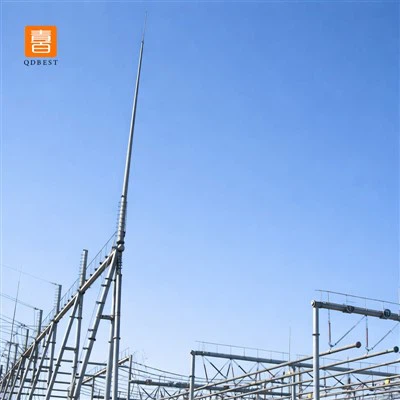
First off, let’s get one thing straight: emergency response for transmission towers isn’t a one-size-fits-all play. A plan for a tower in the middle of a Texas oil field? Way different from one tucked in the Pacific Northwest’s old-growth forests, or a unit just outside a downtown metro area. That’s why every solid plan starts with a pre-emergency risk assessment—something we actually help our clients do before they even install our towers. We don’t just drop a 100-ft lattice tower and dip; we look at what could take it out. For example, if a tower’s in a flood zone in Louisiana, we’re not just talking about making the base 2 ft above the 100-year flood level—we’re factoring in how fast response teams can get there when floodwaters rise. If it’s in tornado alley? We run stress tests on our towers to withstand EF2 winds, and we note which nearby roads are clear of power lines so repair crews can access it in a storm’s aftermath.
Speaking of access, that’s a huge part of emergency response that people sleep on. I’ve had a client out in Wyoming where a transmission tower went down due to a lightning strike (shoutout to summer thunderstorms out there), and the only way to get a bucket truck to it was a 12-mile dirt road that turned to mud after the storm. It took 6 hours for the crew to get there, and by then, the substation down the line was acting up because the power gap was too long. So good plans include pre-scouted access routes, mapped both in normal conditions and for when snow, mud, or fallen trees block them. Some utilities we work with use GPS trackers on their response vehicles now, so if a road is blocked, the system reroutes the crew automatically. We also suggest that our clients mark each tower’s base with a unique QR code—scannable from a phone—that has the tower’s specs, its exact GPS coordinates, and contact info for our team and the utility’s engineering crew. No more flipping through binders for a specific tower’s bolt size or concrete base depth when you’re on site in a crisis.
Next, let’s talk about the actual emergency phases, because plans need to cover before, during, and after the event. Before anything happens, there’s inventory and redundancy. Transmission towers don’t snap in half every day, but when they do, you can’t wait 8 weeks for a custom-made replacement part. That’s why we keep a stock of common tower components at three regional warehouses across the US—cross-arms, base plates, lattice sections, even insulators. For example, if a 50-ft section of a steel lattice tower gets snapped by a falling tree in Georgia, we can ship a replacement section to the local utility in 24 hours, not 2 weeks. We also help clients map redundancy in their line layouts—so if one tower goes down, power can be routed around it via a secondary line, which cuts down on outage time. I once worked with a utility in Ohio that had a line with 12 towers; they didn’t have redundancy built in, so when an ice storm took out 3 towers, 200,000 people lost power for 3 days. Now they’ve added backup lines, and their response time for future events is way shorter.
During the emergency, the plan needs a clear chain of command. No one’s got time for miscommunication when lines are down and phones might be spotty. We recommend that each utility assign a dedicated transmission tower response lead, who’s the only point person for tower-related issues during a crisis. That lead should have a direct line to our emergency response team (we have a 24/7 hotline, by the way—no voicemail menus, just a real person who knows towers) and to the local repair crews. Also, drone usage is non-negotiable now. When a tower goes down in a remote area, sending a crew to walk the line first is a waste of time and dangerous. Drones can map the damage in 15 minutes, show if the whole tower’s collapsed or just a cross-arm is broken, and even check for live power lines nearby so crews don’t get hurt. We’ve started including drone-compatible mounting points on all our new towers, so utilities don’t have to add them later—small detail that saves hours during a disaster.
Now, the post-event part is where a lot of plans fall short. It’s not just fixing the tower and moving on—it’s documenting what happened so you’re ready for next time. We work with clients to do a post-incident review every time a tower is damaged. For example, if a tower was hit by a semi-truck that ran a stop sign, we’ll look at whether the tower’s base marker was visible enough, or if the road needs better signage. If it was a wildfire, we’ll check if the tower’s protective coating held up, or if trimming trees around the tower could prevent future fires from weakening the structure. Last year, we had a client in California where a tower’s steel corroded faster than expected because of a wildfire’s smoke residue mixed with dew. After our review, we started offering a specialized ceramic coating for towers in high-fire areas that resists that corrosion, and now that client’s towers have held up way better during subsequent fire seasons.
Wait, let’s not forget about small, preventable emergencies too. A lot of people think emergency plans are only for big events like tornadoes or hurricanes, but a loose bolt on a tower can cause a tiny outage that adds up. That’s why we push our clients to include regular, pre-emergency checks in their plans. We provide free digital checklists for tower inspections—stuff like tightening bolts, checking for rust, making sure insulators aren’t cracked—so crews can knock them out before a small issue becomes a full-blown tower failure. Last quarter, a utility in Texas used our checklist and found 12 loose bolts on a tower that’s near a highway; they tightened them up, and a week later, a semi hit the tower’s guy wires. If those bolts had been loose, the tower would’ve collapsed, but because they were tight, it only took out one cross-arm instead of the whole structure.
Now, as someone on the supply side, let me be real with you—there’s a gap between what utilities want in an emergency plan and what they actually can pull off. A lot of smaller utilities don’t have the budget for big regional warehouses or drones, so we’ve worked with them to create scaled-down plans that still work. For example, instead of keeping 10 replacement tower sections, they keep 2 of the most common sizes, and we offer next-day delivery for the rest. We also host free training sessions for utility crews on basic tower emergency repairs—like how to stabilize a fallen tower temporarily so power can be rerouted while waiting for a full replacement. No one’s expecting a line crew to build a new tower from scratch, but learning how to reinforce a damaged base with steel beams can cut outage time by hours.
I’ve also learned that communication with the community is part of the emergency plan, which might sound weird, but hear me out. If a tower goes down and the power is out for 10 hours, people will be mad, but if you tell them upfront that you’re waiting for a replacement part from our warehouse, that the crew is on their way, and when power should be back, they’re way more understanding. We help clients put together quick, clear updates—via text, local radio, or social media—that include the tower’s location (using that QR code we mentioned earlier) so people know exactly what’s going on. No more vague “power outage due to transmission line damage” messages—specificity cuts down on calls and frustration.
Let me give you a concrete example of a plan that worked, because that’s what matters. Last fall, a storm system in the Midwest brought 3 inches of freezing rain and 50 mph winds. A utility we work with in Illinois had their emergency plan locked in: they had pre-scouted access routes marked, a stock of replacement cross-arms at their local office, drone crews on standby, and a direct line to our 24/7 team. When a tower’s cross-arm snapped, they scanned the QR code on the base, sent the drone to confirm the damage, ordered a replacement part from our stock, and had a crew on site installing it in 4 hours. The power was back for 12,000 people in that area by midnight, instead of the projected 18 hours. That’s the win we’re all after here.

Here’s the thing: electrical transmission towers are the unsung heroes of the power grid. They’re 100 feet up, out of sight, out of mind—until they’re not. An emergency response plan isn’t just a binder on a shelf; it’s the difference between a 4-hour outage and a 2-day blackout, between crews getting hurt and staying safe, between a community frustrated and one that feels supported. As a transmission tower supplier, our job isn’t just to build a strong, steel frame. It’s to help our clients build plans that make that frame part of a resilient system. If you’re a utility manager, a grid operator, or someone who’s tired of dealing with preventable power outages, hit us up to chat about updating your emergency response plan, restocking parts, or even learning how our towers and services can make your grid more reliable. We’re not just selling equipment—we’re partnering with you to keep the lights on when it matters most.
Tubular Tower References:
- North American Electric Reliability Corporation (NERC). Transmission Tower Emergency Response and Resilience Guidelines. 2022.
- Federal Emergency Management Agency (FEMA). Power Grid Emergency Response Framework. 2021.
- International Electrochemical Commission (IEC). Electrical Transmission Tower Safety and Emergency Maintenance Standards. 2023.
Qingdao BEST Steel Structure Co., Ltd.
Qingdao BEST Steel Structure Co., Ltd. is one of the most professional electrical transmission tower manufacturers and suppliers in China. We warmly welcome you to buy customized electrical transmission tower made in China here from our factory. If you have any enquiry about OEM service, please feel free to email us.
Address: Jiaobei Industrial Park, Qingdao, China
E-mail: sales@qdbsstower.com
WebSite: https://www.qdbsstower.com/
