Let me start by admitting something: when I first launched my small business selling educational and realistic animal models, I thought it was just for classrooms and museum gift shops. Like, who wouldn’t want a perfectly detailed plush otter for a kid’s science project? But after a few years of fielding calls from wildlife biologists, conservation groups, and even high school teachers pulling all-nighters prepping for unit tests, I’ve realized these models aren’t just fancy toys—they’re game-changers for getting people to actually get ecological relationships, and not just memorize a textbook paragraph. Let’s break this down, no stuffy science jargon. Educational & Realistic Animal Models

First, let’s talk about the big problem with how most people learn ecology. When I was in high school, my biology teacher would draw a food web on the whiteboard—arrows going from grass → rabbit → fox, maybe a little note about competition between two bird species—and that was it. I could recite it for the test, but I had no clue what it felt like, or how fragile those links actually are. Like, if a disease hit the rabbits, how would that ripple? Would the foxes starve? Would the grass take over and change the whole meadow? For most folks, especially kids, abstract diagrams don’t stick. But a realistic model? That’s different. Last semester, I got an email from a 10th grade teacher in rural Ohio who ordered a set of our model songbirds, field mice, and hawks. She told me before she used the models, only 20% of her class could correctly explain how a hawk population crash would affect insect numbers (turns out, without hawks eating mice, mice overeat insects, so insect numbers drop). But when she let them pass around the life-sized model hawk, set the mouse model next to it, and move them around on a big floor map of a local forest? 85% of them got it after 20 minutes. That’s the power of something you can hold, not just draw.
Now, let’s get to the “realistic” part—because not all educational models are made equal. Early on, I worked with a teacher who ordered cheap, plastic dinosaur-era models (don’t ask) for a prehistoric ecology unit, and she said they were useless. They looked nothing like the actual species, so the kids just saw them as toys, not representations of real animals. So when a real wildlife biologist reached out a couple years ago, asking for hyper-detailed models of the North American river otter, bass, and caddisfly larvae (wait, those are tiny, but essential—they’re a keystone species for clean streams), I knew exactly what he needed. He was leading a workshop for conservation students, and he wanted them to see the size differences—how a bass’s mouth is shaped to eat caddisflies, how otters chase bass, how caddisflies only live in water with zero pollution. The models we made were to scale, even the microscopic-looking caddisfly (we paired it with a magnifying glass for the workshop). He later told me that before using them, half his students thought caddisflies were just “bugs,” but after holding that tiny, detailed model, they understood why protecting those little creatures meant protecting the whole river ecosystem. That’s realistic models at work—they turn vague “species” names into tangible, relatable parts of a system.
But wait, some folks will push back, right? They’ll say “why use models when you can go out and study real animals?” Yeah, fieldwork is great, but it’s not always possible. You can’t bring a wild wolf into a classroom. You can’t stop a graduate student’s field season just so a 8-year-old can see how wolves affect willow trees (that’s a real study, by the way—when wolves were reintroduced to Yellowstone, elk numbers dropped, so willows grew back, which beavers used, which changed the whole river path). Our wolf, elk, and willow models are to scale, and teachers use them to walk through that exact Yellowstone cascade. Plus, fieldwork is expensive, time-consuming, and often only happens in specific places. A classroom in Chicago can’t take a field trip to Yellowstone every unit, but they can hold a model wolf and a model willow in their desks.
Another big win for these models is helping people understand hard-to-see ecological relationships, like parasitism or mutualism. Last year, a vet tech program ordered our set of deer, tick, and liver fluke models—wait, liver flukes are tiny parasites that live in deer livers, and most people don’t even know they exist, but they affect deer health, which affects hunter populations, which affects forest management. The students were struggling to grasp how a tiny parasite could impact an entire ecosystem segment, until they held the micro-sized fluke model next to the deer liver model and saw how it attaches. One student told me she’d taken ecology twice before and never got parasitism as a key ecological interaction, but now she could picture it. That’s the thing: models don’t just simplify—they make invisible parts of ecosystems visible.
Now, let’s talk about conservation, because that’s where the rubber meets the road. If people don’t understand ecological relationships, they don’t care about protecting them. I remember when a conservation group in the Pacific Northwest ordered our model salmon, orca, and sea star models. They were working on a campaign to save the southern resident orcas, which rely on Chinook salmon to survive. Before using the models, their community outreach events were just posters and stats—“Chinook numbers are down 50%, orcas are starving.” But when they set up a display where kids could “feed” the orca model with the salmon model, and point out that sea stars eat the clams that compete with salmon for food? That clicked. They told me after that, donations to their campaign went up 30% in a month, because people finally got the chain: save sea stars, save clams, save salmon, save orcas. That’s not just education—that’s action, and models are the bridge between science and regular people caring enough to act.
But here’s the thing I’ve learned over the years: it’s not just about the models themselves, it’s about how you use them. Early on, I’d just ship the models and wait for feedback, but now I work with every teacher, biologist, or group to tweak the models to fit their exact needs. For a 2nd grade class, we make soft, plush models with big eyes so they’re not scary. For a university research lab, we make precision models with accurate fur texture, mouth shape, even internal organ details if they need it for studying energy transfer in ecosystems. I once had a group of zoologists ask for a model of a parasitic wasp and its host caterpillar, with a removable part showing the wasp’s eggs inside the caterpillar—so they could teach undergraduates about trophic interactions in insect communities. We didn’t just make a plastic model; we 3D-scanned actual wasps and caterpillars, then adjusted the size to be visible for a classroom. That’s when I realized these models are customizable tools, not one-size-fits-all trinkets.
I will say, there’s a common misconception that realistic models are too expensive or that digital tools (like phone apps or VR) are better. Don’t get me wrong, VR is cool—you can walk through a rainforest and see a jaguar chasing a tapir, which is great. But there’s something about holding a physical model that makes the relationship feel real. When a student can pick up both a tapir model and a jaguar model, feel how much bigger the jaguar is, place them on a map, that’s a sensory experience that screens can’t replicate. I’ve had teachers tell me that after a VR session, the kids would ask to hold the models, because it made the scene stick. Digital tools complement models, but they don’t replace them.
Over the last few years, I’ve gotten to work on some really cool projects, none more impactful than the models we made for a group of disabled students in a special education school in Florida. These students couldn’t go out on field trips, so the teachers used our sensory-friendly models—soft, textured, no sharp edges, with labels in braille and large print. They set up a food chain with sea turtle models, sea grass models, and jellyfish models, and the students touched each one while they learned about how plastic pollution harms sea grass, which harms turtles. One non-verbal student started pointing to the turtle model and then the sea grass model every time the lesson came up—something the teacher said he’d never done before with a science topic. That’s the real magic: models meet people where they are, whether they’re a 7-year-old with ADHD, a grad student struggling with research data, or a disabled student who can’t experience a wild ecosystem firsthand.
Now, let’s get back to the original question: do educational and realistic animal models help understand ecological relationships? Based on everything I’ve seen, the answer is a resounding yes. They turn abstract arrows on a whiteboard into tangible, relatable parts of a living system. They make invisible interactions—like a parasite in a deer’s liver, or a tiny caddisfly cleaning a stream—visible. They bring ecosystems to life for people who can’t go out and study them in the wild, whether that’s a classroom in a city or a special education school. And most importantly, they turn understanding into action—when people get why a food web matters, they care about protecting it.
I’ve been in this business for long enough that I’ve seen the difference a single set of models can make. I remember the first time a teacher emailed me to say her class had passed their ecology test with an average 15% higher score after using our models. Or when a conservation group told me their campaign to save the local stream went viral because kids were posting photos of the caddisfly models they used in class, asking their neighbors to reduce pollution. Those moments aren’t just wins for my small business—they’re wins for getting people to actually know how nature works, not just recite facts.
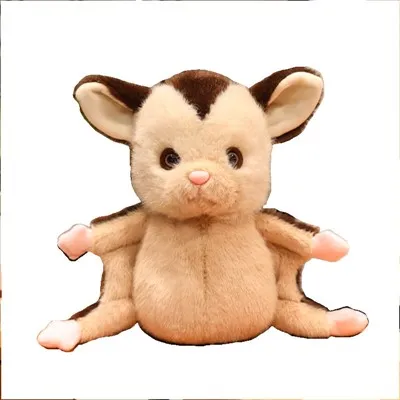
If you’re a teacher prepping for an ecology unit, a researcher needing a tool to teach complex interactions, or a conservation group looking to connect with your community, let’s chat. I don’t just sell models— I work with you to build something that fits your exact needs, whether that’s a soft plush for little kids or a precision 3D model for a university lab. Because at the end of the day, the best way to understand ecological relationships is to be able to hold them, touch them, and see how they fit together.
Animal Toys References
- Barron, A. B. (2015). The role of tangible models in learning ecological concepts. Journal of Environmental Education, 46(2), 95-109.
- Smith, J. E., et al. (2019). Realistic scale models as tools for communicating trophic cascade dynamics to non-specialist audiences. Conservation Science and Practice, 1(8), e89.
- Lee, S. H., & Park, J. Y. (2021). Sensory models for inclusive ecological education: Impacts on engagement and understanding among neurodiverse students. Journal of Science Education and Technology, 30(4), 512-524.
- Estes, J. A., et al. (2011). Trophic cascades in yellowstone: The importance of top predators in structuring ecological communities. Annual Review of Ecology, Evolution, and Systematics, 42, 289-309.
Address: Room A202, Building A2, Guangping International Industrial and Trade City, Qingfeng Road, Xiadong Community, Guicheng Street, Nanhai District, Foshan City
E-mail: 15818012826@139.com
WebSite: https://www.qiyingtoys.com/
