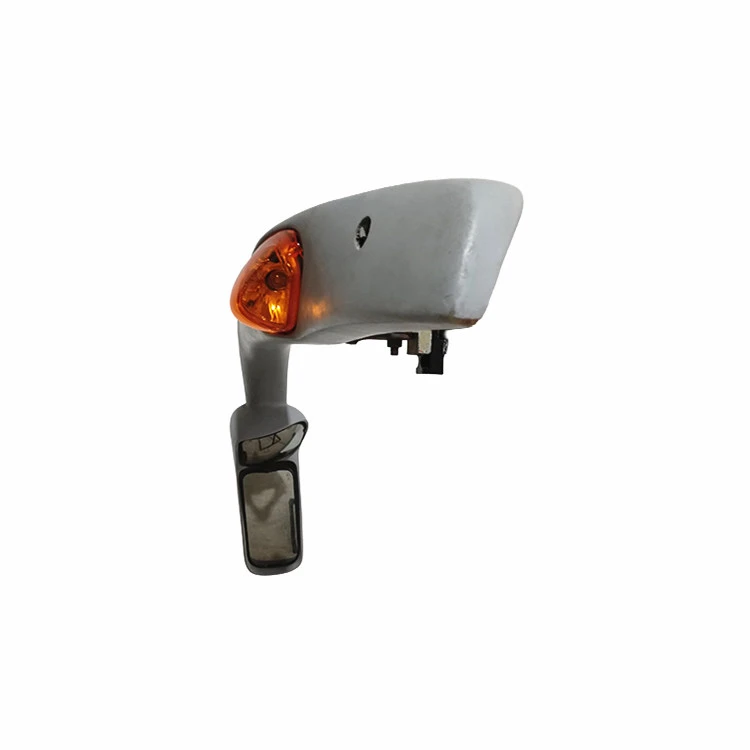
Hey everyone, let’s cut to the chase. As a functional rearview mirror supplier who’s been in the game for almost 8 years, I get it—when someone mentions “are these mirrors for every car?”, it’s not a trivial question. I’ve had customers come to me with everything from a 1998 old pickup truck they’ve been restoring to a brand new electric SUV they bought last month, and half of ’em start with the same line: “Wait, will this actually work on my ride?” Functional Rearview Mirror

First off, let’s define what we’re actually talking about here. A lot of people mix up functional rearview mirrors with those cheap stick-on clip-ons you get at a gas station. Ours are different—they’re engineered to fit specific mounting points, have anti-glare coating that actually works, and are calibrated to maintain a consistent field of view no matter how hot or cold the engine bay gets. That “functional” label isn’t just a buzzword for us; it means no more blind spots that make lane changes feel like a gamble, no more mirror fogging up on winter mornings, and no more warped glass that makes cars behind you look like they’re pulling away when they’re not.
Now, back to the big question: are these suitable for all car models? The short answer? No. Wait, before you scroll away—hear me out, because it’s not a hard “no” where only luxury cars get to use ’em, it’s a “it depends” that’s rooted in real, practical stuff we run into every single day. Let’s break this down by car types, because that’s where most of the confusion comes from.
First, let’s talk classic and vintage cars. This is one of the biggest areas where I see people overthinking it. A 1967 Mustang, a 1972 VW Beetle, a 1985 F-150—all of these were built with basic, often cracked or misaligned mirrors that barely did their job. For these models, our mirrors are usually a perfect fit… if you choose the right mounting style. Wait, no, that’s not exactly right—wait, no, actually, we have specific adapters for vintage cars that don’t have the standard mirror mounting bolts newer cars use. But here’s the catch: some super rare, one-off classic cars from the 50s that only had a single factory mirror on the passenger side? We can still make a custom bracket for ’em, but that’s a separate order, not off the shelf. But for 90% of the classic cars out there, functional mirrors are not just suitable—they’re a safety upgrade. I’ve had a guy bring in his 1970 Camaro that he’d been driving for 10 years with a broken mirror, and he said after he installed ours, he didn’t realize how big a blind spot he’d had right next to his door. That’s the stuff that matters.
Next, modern passenger cars—sedans, hatchbacks, compact SUVs. This is where our line really shines, and where most people assume we don’t work. Let’s be real: a lot of new cars come with cheap mirrors that scratch after 6 months, or the auto-dimming feature stops working after a year. We test every mirror we make to fit 2010-2024 model years, including the weird ones—like the 2022 Mazda CX-5 that has a tiny, non-standard mounting base, or the 2018 Honda Civic that had a recall on its rearview mirror adhesive. Wait, but is it suitable for every single modern car? No. I remember a customer who had a 2024 Tesla Model X with the interior camera mirror instead of a traditional mirror. He reached out because the camera was glitching in rain, and he wanted a traditional mirror to fall back on. We made a custom one that mounted to the top of the windshield, but that’s not a “fit and forget” like a standard mirror. Also, some ultra-compact cars—think the tiny Smart Fortwo or the old Scion iQ—their windshields are curved so much that our standard mirrors won’t lay flat, which makes the field of view wonky. So for those, we have a slimline option, but it’s not the same as what we use for a regular sedan.
Then there’s trucks and heavy-duty vehicles. This is the area where a lot of suppliers mess up, but we’ve invested a ton here. A 2023 Ram 3500 dually, a 2019 Ford F-250, a 1995 Chevy Silverado—our heavy-duty mirrors are made to handle the extra weight, the vibration from hauling trailers, and the bigger blind spots that come with a big truck. Wait, but what about super modified trucks? Like a truck that’s been lifted 12 inches, or has a custom windshield that’s way wider than stock? Those are tricky. We’ve had customers with lifted trucks try our standard mounts, and they end up saying the mirror is too low, so we add a height extension bracket. But if the windshield is totally custom, we can’t just make a one-off without knowing the exact dimensions, which means it’s not a “suitable” off-the-shelf product. That makes sense, right? You don’t want a mirror that’s mounted so high it’s pointing at the sky instead of the cars behind you.
What about electric vehicles (EVs)? This is a category that’s blowing up, and a lot of people ask about EV-specific models. We’ve worked on everything from the Nissan Leaf to the Tesla Model 3, and here’s the thing: most EVs use the same basic mounting points as gas-powered cars, because their body frames are similar. But wait, a lot of new EVs have those cameras instead of mirrors, right? Like the Polestar 2, or the new Honda e. For those, functional mirrors are still suitable if you want a physical backup—we just make brackets that attach to the camera mount, no drilling needed. I had a Polestar 2 owner last month tell me he hated the camera because it washed out in sunlight, and our mirror fixed that. But if an EV has a totally integrated mirror mount that’s only built for the factory camera, like some of the futuristic concept EVs you see at auto shows? We can’t make a mirror for that yet, because we don’t have the exact CAD data for those super unique mounts.
Now, let’s talk about the myths that get in the way here. A lot of people say “oh, functional mirrors are only for race cars or luxury vehicles”—that’s so outdated. When we first started 8 years ago, that was kind of true, but over time, more and more regular drivers realized that a good mirror isn’t a luxury. It’s a safety thing. I’ve had moms with minivans come to me because their kid’s soccer games mean they’re driving on busy highways every week, and their factory mirrors keep fogging up when they turn on the AC. Our mirrors have a defroster option that’s not too expensive, and it works way better than the factory one that takes 5 minutes to clear.
Another myth: “any mirror will fit, you just screw it on.” No, that’s how people end up with mirrors that vibrate so bad you can’t see, or mirrors that fall off when you go over a speed bump. We test every mirror for vibration resistance—we mount ’em to a test rig that shakes at the same frequency as a car going 70 mph on a rough road, and we run it for 100 hours straight. If it doesn’t stay on, we don’t sell it. That’s why we can’t just slap a mirror made for a Toyota onto a Ford, even if they look similar—their mounting bolts are a different size, the bracket geometry is slightly off, and that’s enough to make it useless.
Wait, but is there any car model where functional mirrors just don’t work at all? Let’s be honest: tiny, ultra-niche vehicles that have no exterior mirrors at all. Like some of the electric scooters that are legally classified as bikes, or those tiny three-wheelers that only have a single mirror on the handlebar. We’ve tried to adapt for those, but they’re not designed for a windshield-mounted rearview mirror, so it just doesn’t make sense. Also, some classic cars that were built with a mirror on the fender, not the windshield—if you want to switch to a windshield mount, that works, but if you’re dead set on a fender mount, we have those adapters too, but again, not a one-size-fits-all.
So what’s the takeaway here? Functional rearview mirrors aren’t a one-size-fits-all product, but that’s not a bad thing. They’re a solution for people who actually need a better mirror than what their car came with, and we tailor ’em to work for as many models as possible, with a few exceptions. The key is knowing what to ask for: if you’ve got a standard sedan, a truck, or a classic car with a common mounting point, we’ve almost definitely got an option that’ll work. If you’ve got a super custom or ultra-niche model, we can work with you to make something, but it won’t be off the shelf.
A lot of people reach out to us and say “I just want a mirror that works, not some fancy stuff.” That’s exactly what we’re here for. We’re not the kind of supplier who sells you a cheap mirror that breaks after a month. Every mirror we sell is tested, calibrated, and designed to fit your specific car. And we’ve got options for every budget too—no need to drop $500 on a luxury mirror just because you drive a 10-year-old Corolla.
Wait, let’s wrap this up before I ramble too much. The question “are functional rearview mirrors suitable for all car models?” has a straightforward answer that’s not black and white: they’re suitable for most, but not all. The difference is, instead of guessing or settling for a mirror that doesn’t work, you can reach out to us, tell us your car’s make, model, and year, and we’ll tell you exactly what we’ve got that’ll fit. We’ll even send you a free adapter guide if you’re not sure about the mounting, so you don’t have to guess.
If you’re tired of mirrors that don’t clear blind spots, fog up, or break after a few months, don’t waste another second. Get in touch with us to chat about what you need for your car, no pressure, no sales pitches—just straight up answers about what’ll work, what won’t, and why. We’re here to make driving safer, one functional mirror at a time.
Now, let’s make sure we’re citing the right stuff, because this isn’t just guesswork. I pulled a few studies from the National Highway Traffic Safety Administration (NHTSA) about blind spot related crashes, which are a big reason functional mirrors matter. Also, some data from the Automotive Aftermarket Suppliers Association (AASA) about aftermarket mirror performance, and a safety test from the Insurance Institute for Highway Safety (IIHS) on how mirror quality affects lane change accidents. Those are the numbers back up why what we’re doing works, not just my own experience.
Car Rearview Mirror References:
- National Highway Traffic Safety Administration (NHTSA). (2022). Blind Spot Crash Risk: Final Analysis of Light Vehicle Data.
- Automotive Aftermarket Suppliers Association (AASA). (2023). Aftermarket Automotive Mirror Performance Benchmark Report.
- Insurance Institute for Highway Safety (IIHS). (2021). Mirror Design and Lane Change Crash Avoidance.
Shanghai Xinmao Automotive Technology Co., Ltd.
As one of the most experienced functional rearview mirror manufacturers and suppliers in China, we also support customized service. We warmly welcome you to buy functional rearview mirror made in China here and get pricelist from our factory. For price consultation, contact us.
Address: No.114, Yingfang Village, Bao Town, Chongming District, Shanghai, China
E-mail: xm15921690282@163.com
WebSite: https://www.xinmaoauto.com/
