Investment casting, also known as lost-wax casting, is a highly precise manufacturing process that allows for the production of complex and detailed metal parts. As a supplier in the investment casting industry, I understand the critical importance of quality control. In this blog, I will delve into the various quality control measures that we implement to ensure the production of high – quality investment castings. Investment Casting

Raw Material Inspection
The foundation of a quality investment casting lies in the raw materials. We start by thoroughly inspecting all incoming raw materials, including wax, refractory materials, and metals.
For wax, we check its melting point, viscosity, and shrinkage rate. These properties can significantly affect the dimensional accuracy of the wax patterns. Any deviation from the specified values can lead to defective castings. For example, if the wax has a higher shrinkage rate than expected, the final casting may be smaller than the intended size.
Refractory materials are crucial for creating the ceramic shell. We conduct tests on their chemical composition, particle size distribution, and thermal stability. A proper chemical composition ensures that the ceramic shell can withstand the high temperatures during the casting process without cracking or deforming. The particle size distribution affects the surface finish of the shell, and thermal stability is essential to prevent shell failure during the pouring of molten metal.
When it comes to metals, we perform chemical analysis to verify the elemental composition. Different metals and alloys have specific requirements for their chemical makeup to achieve the desired mechanical properties. We also assess the physical properties such as density, hardness, and ductility. For instance, in the case of stainless steel castings, the correct amount of chromium, nickel, and other alloying elements is necessary to ensure corrosion resistance.
Wax Pattern Quality Control
The wax pattern is the first step in the investment casting process, and its quality directly impacts the final casting. We use a combination of visual inspection and dimensional measurement to ensure the accuracy of the wax patterns.
Visual inspection is carried out by trained operators. They look for any surface defects such as cracks, bubbles, or uneven surfaces. These defects can be transferred to the ceramic shell and ultimately to the final casting. For example, a bubble in the wax pattern may result in a porosity defect in the casting.
Dimensional measurement is performed using precision measuring tools such as calipers, micrometers, and coordinate measuring machines (CMMs). We compare the measured dimensions of the wax patterns with the design specifications. Any deviation beyond the acceptable tolerance range is corrected. This ensures that the final casting will meet the required size and shape.
We also conduct process control during the wax pattern production. Factors such as injection temperature, pressure, and cooling time are closely monitored. These process parameters can affect the quality of the wax patterns. For example, if the injection pressure is too high, it may cause the wax to overflow or create flash, while if the cooling time is too short, the wax pattern may warp.
Ceramic Shell Quality Assurance
The ceramic shell is formed around the wax pattern and plays a vital role in the investment casting process. We have several quality control measures for the ceramic shell.
First, we check the thickness of the ceramic shell. A uniform and appropriate thickness is necessary to ensure the mechanical strength of the shell during the casting process. If the shell is too thin, it may break during the pouring of molten metal, while a too – thick shell can lead to longer cooling times and potential defects in the casting.
We also perform a permeability test on the ceramic shell. Permeability is crucial for allowing the escape of gases during the casting process. If the shell is not permeable enough, gas bubbles can get trapped in the casting, resulting in porosity defects.
The integrity of the ceramic shell is inspected visually and through non – destructive testing methods such as X – ray and ultrasonic testing. These methods can detect internal defects such as cracks or voids in the shell. Any defective shells are rejected to prevent the production of faulty castings.
Molten Metal Quality Management
The quality of the molten metal is a key factor in the success of the investment casting process. We take several steps to ensure the quality of the molten metal.
We use induction furnaces to melt the metals. These furnaces provide precise temperature control, which is essential for achieving the correct melting and pouring temperatures. The temperature of the molten metal affects its fluidity, which in turn impacts the filling of the ceramic shell. If the metal is too cold, it may not flow properly into all the cavities of the shell, resulting in incomplete castings.
Before pouring the molten metal, we perform a final check on its chemical composition. This is done using spectrometers to ensure that the metal still meets the required specifications after the melting process. Any adjustments are made if necessary to ensure the quality of the final casting.
We also monitor the pouring process carefully. The pouring time, speed, and angle are all critical factors. A proper pouring process helps to minimize turbulence, which can introduce air bubbles and impurities into the casting.
Post – Casting Inspection
After the casting is completed, a comprehensive post – casting inspection is carried out. This includes both non – destructive and destructive testing methods.
Non – destructive testing methods such as X – ray, ultrasonic, and magnetic particle testing are used to detect internal and surface defects. X – ray testing is effective in detecting internal porosity, cracks, and inclusions. Ultrasonic testing can also detect internal defects and is particularly useful for detecting flaws in thicker castings. Magnetic particle testing is used to detect surface and near – surface defects in ferromagnetic materials.
Destructive testing methods such as tensile testing, hardness testing, and metallographic analysis are also performed. Tensile testing measures the strength and ductility of the casting. Hardness testing determines the hardness of the material, which is an important property for many applications. Metallographic analysis involves examining the microstructure of the casting to ensure that it has the desired grain structure and phase composition.
Quality Management System
In addition to the specific quality control measures at each stage of the investment casting process, we have a comprehensive quality management system in place. This system is based on international standards such as ISO 9001.
We have documented procedures for all aspects of our operations, from raw material procurement to final product delivery. These procedures ensure that every step of the process is carried out consistently and in accordance with the quality requirements.
We also conduct regular internal audits to assess the effectiveness of our quality management system. Any non – conformities are identified and corrective actions are taken. External audits by independent certification bodies are also carried out periodically to ensure that our quality management system meets the international standards.
Continuous Improvement
Quality control is not a one – time activity but an ongoing process. We are committed to continuous improvement in our investment casting processes.
We collect and analyze data from all stages of the production process. This data helps us to identify trends, potential problems, and areas for improvement. For example, if we notice a high rate of porosity defects in a particular type of casting, we can analyze the process parameters and raw materials used to determine the root cause.
We also encourage feedback from our customers. Their input is valuable in identifying areas where we can improve the quality of our products and services. Based on this feedback, we make necessary adjustments to our processes and quality control measures.
Conclusion
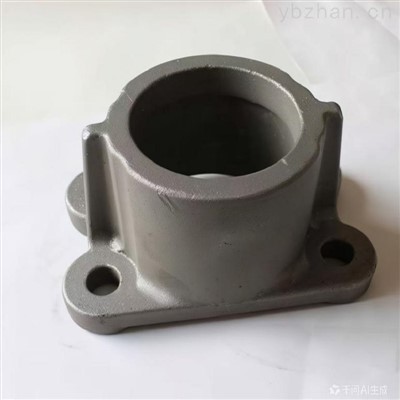
As an investment casting supplier, quality control is at the heart of our operations. By implementing a comprehensive set of quality control measures at every stage of the investment casting process, from raw material inspection to post – casting testing, we ensure the production of high – quality castings that meet the strict requirements of our customers.
Fan Impeller If you are in the market for investment castings and are looking for a reliable supplier with a strong commitment to quality, we would be delighted to discuss your requirements. We have the expertise and experience to provide you with customized solutions that meet your specific needs. Contact us to start a procurement discussion and let us work together to achieve your casting goals.
References
- ASM Handbook, Volume 15: Casting. ASM International.
- Investment Casting Institute (ICI) Technical Papers.
- ISO 9001:2015 Quality Management Systems – Requirements.
Shandong Shunye Stainless Steel Co., Ltd.
Address: Shandong Province, Binzhou City, Wudi County, Liubao Town, Zhangdong Road, Duliucun Village
E-mail: sales@wdshunye.com
WebSite: https://www.shunyecasting.com/
