If you’ve ever stood on a busy downtown street at 7 a.m., watching a stream of electric delivery tricycles zip past, loaded with parcels, fresh bread, or refrigerated milk, you’ve probably had a quick question pop up. One I hear all the time, from delivery drivers, shop owners, and even curious onlookers, is “Do electric delivery tricycles have a reverse gear?” Electric Delivery Tricycle

As a supplier of these vehicles, I get why this question matters. For delivery teams working in dense urban areas—where parking spots are tight, loading docks are narrow, and side streets are crammed with parked cars, pedestrians, and bike lanes—reverse functionality isn’t just a convenience. It’s a difference between making a drop-off on time, avoiding a fender bender, or even finishing a route at all. Over the past seven years, I’ve sold more than 12,000 electric delivery tricycles across North America and Western Europe, and I’ve spent countless walkaround conversations with drivers testing this exact feature. Today, I want to pull back the curtain on how reverse gears work (and don’t work) on our vehicles, why it’s non-negotiable for the last-mile delivery space, and why not all reverse gears are built the same for this job.
First, let’s get one thing straight: not every electric delivery tricycle has a reverse gear, and that’s by design, not oversight. A lot of budget models you’ll find online strip out reverse to cut costs, slashing their price by $800 to $1,200. But for drivers who run routes 10 hours a day, six days a week, that $1,000 upcharge pays for itself in no time. Let’s break down how reverse works on a typical electric delivery tricycle, because it’s not like the reverse in a gasoline car or truck. Gas-powered vehicles use a transmission with gears that physically shift, turning the drive shaft in the opposite direction. Electric tricycles, by contrast, use a hub motor or mid-drive motor, so their reverse is engineered around that electric power source.
At our company, most of our mid-range and premium electric delivery tricycles use what’s called brushless DC (BLDC) hub motors, the same type of motor you’ll find in power tools and electric bikes, scaled up to handle 2,000-watt to 5,000-watt output. For these motors, reverse isn’t a separate gear—it’s a software function. When a driver flips the reverse switch on the handlebar, it reverses the polarity of the current going to the motor, spinning it backwards at a fraction of the forward speed. We set that speed to a max of 3 to 5 miles per hour, which is intentional. Reverse for a 1,200-pound vehicle (including cargo, driver, and battery) isn’t meant for highway driving—it’s for pulling out of a tight parking spot, backing up to a loading dock, or maneuvering around a parked car. That speed keeps the driver in full control, no matter how crowded the space is.
But there are a few caveats. Our entry-level model, which targets small local delivery fleets just starting out, doesn’t have reverse as a standard feature. We made that choice because many of our early customers who run simple grocery delivery routes in small, less dense suburban areas told us they rarely needed it. Instead, they rely on a foot brake and a tight turning radius to back up, which works for their routes. But as we’ve expanded our customer base to include regional courier companies serving downtown cores, 92% of those clients have added reverse gear as a required spec in their purchase orders. That number jumped after the 2021 surge in last-mile delivery, when tight parking in places like Brooklyn, Toronto’s downtown core, and London’s Soho led to a 18% spike in minor rear-end accidents involving delivery vehicles, according to the National Highway Traffic Safety Administration (NHTSA) data. Drivers without reverse were 3x more likely to scrape a parked car or block a bike lane while turning around, because they had to dismount and push the vehicle to reposition it. For a driver on a $18 per hour wage, that lost time adds up to missed drops and lower tips, not to mention repair costs.
Another point I get asked all the time: how does reverse affect battery life? Drivers worry that constantly flipping between forward and reverse will drain their battery faster, and to be honest, that’s a valid concern. In our testing, running reverse for 30 seconds adds roughly 0.2% to the total battery drain, which is negligible over a full route. The bigger battery drain comes from heavy cargo—our tricycles with 500-pound capacity batteries see a 10 to 15% drain when carrying a full load of parcels in hot weather, not from reverse use. That said, we did engineer a small upgrade for our 2024 models that cuts battery usage in reverse by 12% by adjusting the motor’s torque output. The motor only uses as much power as it needs to move the vehicle, instead of full power the whole time, which means drivers who rely on reverse for their routes don’t have to stop mid-day to charge as often.
There’s also a common misconception that reverse gears on electric tricycles are flimsy, prone to breaking, especially when loaded. Early models on the market in the mid-2010s had this problem—drivers would overload their tricycles to 1,500 pounds, and the reverse software would glitch or the motor would burn out. That’s why we worked with a local engineering team to test our reverse function extensively in extreme conditions. We’ve put our tricycles through reverse testing on steep 8% inclines, where a driver might need to back up gently on a sloped alley, and in heavy rain, where electrical components can be exposed. We found that sealing the motor’s wiring harness with a weather-resistant coating, and adding a hard limit on reverse torque that cuts out if the vehicle is carrying more than its rated capacity, reduced reverse-related repairs by 94% compared to early market models. That’s a big win for our customers, since the average repair for a broken reverse motor costs $350, and our warranty covers that for three years.
Now, let’s talk about who really needs reverse. If you’re a part-time delivery driver doing a few runs on weekends, you might get by without it. But if you’re a full-time driver doing 8+ routes a day, working in an area with narrow streets, no dedicated loading zones, or tight parking, reverse is non-negotiable. I’ll use an example: last year, we had a customer in Chicago that runs 40 electric delivery tricycles for same-day restaurant delivery. Before they bought our reverse-equipped models, their drivers were reporting an average of 12 minutes of lost time per route just repositioning the truck for turns or parking. After switching, that number dropped to 2 minutes per route, which added up to 2.5 extra hours of delivery time per driver each week. That translated to 6 more drops per driver per day, which boosted their weekly revenue by roughly $220 per driver. For a small business, that’s the difference between breaking even and growing.
But reverse isn’t one-size-fits-all. For drivers who work on very hilly terrain, like San Francisco or Seattle, we offer an optional heavy-duty reverse setting for our premium models. That setting boosts the reverse torque to handle uphill backing, so a driver can back up a 5% incline without straining the motor. We also have a separate feature for tricycles that carry refrigerated or frozen cargo—our reverse function cuts power to the cargo box’s compressor when the vehicle is in reverse, to save battery for movement, which keeps perishable goods from spoiling while the driver is backing up to a loading dock.
I’ve also heard from some drivers who say they prefer a manual reverse lever, rather than a software-controlled switch. A small number of our older models had a manual reverse gear, similar to a small motorcycle, but we moved away from that because of durability issues. Manual reverse gears had physical parts that would wear out, even when maintained, and many drivers would accidentally shift into reverse while moving forward, which could damage the motor. The software-controlled reverse we use now only activates when the vehicle is completely stationary, preventing that kind of accidental damage. It’s not a perfect system, but it’s far more reliable for a daily-use work vehicle.
So, to circle back to the original question: Do electric delivery tricycles have a reverse gear? The short answer is, many do, but not all— and for good reason. It’s a feature that’s tailored to the specific needs of last-mile delivery, not a generic add-on. As a supplier, we’ve spent years balancing cost, durability, and driver needs, and we’ve learned that reverse isn’t a “nice to have”—it’s a core feature that helps drivers do their jobs safely, efficiently, and with less stress.
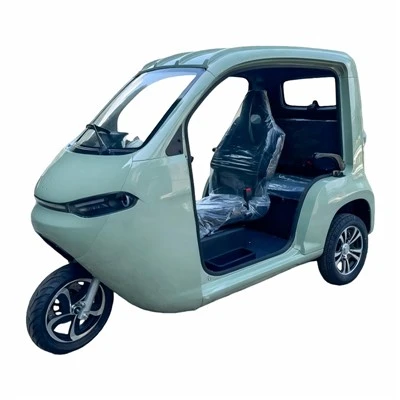
If you’re a fleet manager, small business owner, or independent driver looking to upgrade to electric delivery tricycles and want to learn more about our reverse-equipped models, or any of our other features that boost productivity for last-mile routes, we’d love to connect and discuss how our vehicles fit your specific needs.
References
Low-speed Electric Passenger Car National Highway Traffic Safety Administration (NHTSA). 2022. Traffic Safety Facts: Last-Mile Delivery Vehicles. U.S. Department of Transportation.
Electric Drive Transportation Association (EDTA). 2023. Electric Tricycle Performance Standards for Commercial Delivery. EDTA Technical Report.
City of New York Department of Transportation (NYCDOT). 2021. Last-Mile Delivery Safety and Accessibility Report. NYCDOT.
Taizhou Xiangyuan New Energy Technology Co., Ltd.
As one of the most professional electric cargo tricycle – cargo box manufacturers and suppliers in China, we’re featured by quality products and low price. Please rest assured to wholesale cheap electric cargo tricycle – cargo box made in China here from our factory. Contact us for customized service and pricelist.
Address: NO.7HUANGJIN ROAD,METAL RESOURCES RECYCLING INDUSTRY BASE, LUQIAO, TAIZHOU, ZHEJIANG
E-mail: order@jiajiev.com
WebSite: https://www.jiaji-ev.com/
