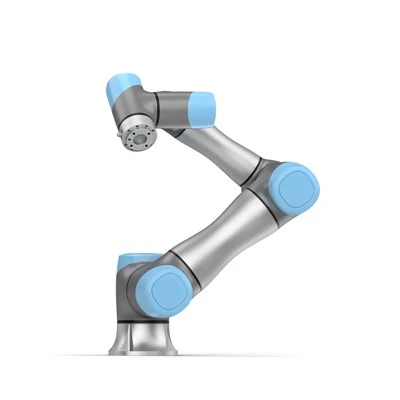
In the dynamic landscape of industrial automation, collaborative robots (Cobots) have emerged as game – changers, revolutionizing the way industries operate. As a trusted Cobot supplier, I am constantly aware of the importance of software updates for these remarkable machines. In this blog, we will explore the essential software updates required for Cobots to keep them at the forefront of efficiency, safety, and innovation. Cobot
1. Safety – enhancement Updates
Safety is the cornerstone of Cobot operations. Since Cobots share workspaces with human operators, ensuring their safe interaction is non – negotiable. Software updates in the safety domain are of utmost importance.
One key area is collision detection. Modern Cobots are equipped with sensors to detect collisions with objects or humans in their workspace. However, as technology advances, software updates can improve the accuracy and responsiveness of these collision – detection systems. For example, new algorithms can be developed to distinguish between intentional and accidental collisions more effectively. This reduces false alarms while ensuring that real collisions are detected and responded to instantaneously, preventing potential injuries to human workers.
Force – limiting capabilities are another aspect that benefits from software updates. The force exerted by a Cobot during its operations needs to be carefully regulated. Updates can refine the force – control algorithms, allowing the Cobot to exert precisely the right amount of force for different tasks. Whether it’s a delicate assembly task or a more robust material – handling operation, proper force limitation ensures the safety of both the workpiece and the human operators.
In addition, safety – zone monitoring can be enhanced through software updates. The Cobot’s perception of its workspace can be refined, allowing it to better define and enforce safety zones. This means that the Cobot can operate more flexibly while still maintaining a high level of safety, adjusting its behavior when human workers enter or leave specific areas of the workspace.
2. Performance – optimization Updates
To meet the ever – increasing demands of industrial production, Cobots need to operate at peak performance. Software updates play a crucial role in achieving this.
One of the main areas for performance improvement is path planning. The ability of a Cobot to plan the most efficient path from one point to another directly impacts its productivity. Software updates can introduce advanced path – planning algorithms that take into account factors such as workspace obstacles, the orientation of the workpiece, and the time required for each movement. These algorithms can optimize the movement of the Cobot, reducing cycle times and increasing throughput.
Motion control is another aspect where software updates can make a significant difference. Smoother and more precise motion of the Cobot’s joints can increase the accuracy of the tasks it performs. Updates can fine – tune the control parameters of the motors, eliminating vibrations and jerks during movement. This not only improves the quality of the finished products but also reduces wear and tear on the Cobot’s mechanical components, extending its service life.
Moreover, software updates can enhance the Cobot’s programming flexibility. New programming interfaces and features can be introduced, allowing users to program the Cobot more easily and quickly. For example, drag – and – drop programming or the ability to create custom programming templates can save a great deal of time and effort, especially for small – and medium – sized enterprises with limited programming resources.
3. Compatibility and Integration Updates
In an industrial environment, Cobots rarely operate in isolation. They need to be integrated with other manufacturing equipment and systems, such as conveyor belts, sensors, and enterprise resource planning (ERP) systems. Software updates are essential to ensure seamless compatibility and integration.
When it comes to integrating with other hardware devices, updates can include new drivers and communication protocols. For example, if a new type of vision sensor is introduced in the manufacturing process, a software update for the Cobot can enable it to communicate effectively with this sensor. This allows the Cobot to use the sensor data for tasks such as object recognition, inspection, and pick – and – place operations.
In terms of integration with software systems, updates can improve the Cobot’s ability to interface with ERP systems. This enables real – time data exchange between the Cobot and the overall production management system. For instance, the Cobot can send information about its status, production output, and any errors or malfunctions to the ERP system. In return, the ERP system can send instructions to the Cobot based on production schedules and inventory levels.
4. Functionality – expansion Updates
As industries evolve, new requirements emerge for Cobots. Software updates can expand the functionality of Cobots to meet these changing needs.
One area of functionality expansion is the addition of new application – specific capabilities. For example, if there is a growing demand for Cobots in the food and beverage industry, software updates can add features such as cleaning and sanitization control. The Cobot can be programmed to follow specific cleaning cycles, ensuring compliance with food – safety regulations.
Another useful functionality that can be added is the ability to learn from previous operations. Machine – learning algorithms can be incorporated through software updates, allowing the Cobot to adapt its behavior based on the results of previous tasks. This can lead to continuous improvement in performance, as the Cobot gradually learns the optimal way to perform a particular task.
Software updates can also introduce new user – interface features. For example, a more intuitive touch – screen interface can be developed, making it easier for operators to interact with the Cobot. This can reduce the training time required for new operators and improve overall user experience.
5. Cybersecurity Updates
In the era of the Internet of Things (IoT), Cobots are increasingly connected to networks, making them vulnerable to cyber threats. Software updates are essential for maintaining strong cybersecurity.
Regular updates can patch security vulnerabilities in the Cobot’s software. As hackers develop new techniques to exploit weaknesses in software systems, manufacturers need to respond quickly by releasing security patches. These updates can protect the Cobot from unauthorized access, data theft, and malicious attacks that could disrupt production or compromise the safety of the workspace.
Moreover, software updates can enhance the encryption methods used by the Cobot for communication. Stronger encryption ensures that the data transmitted between the Cobot and other devices or systems is secure and cannot be intercepted or tampered with. This is particularly important when the Cobot is integrated with cloud – based services or when it is part of a large – scale industrial network.
Conclusion
As a Cobot supplier, I understand that software updates are not just an option but a necessity for the long – term success of our customers. Safety – enhancement, performance – optimization, compatibility and integration, functionality – expansion, and cybersecurity updates all contribute to making Cobots more efficient, reliable, and safe.
Welding Robot If you are interested in learning more about how our Cobots can be updated to meet your specific industrial needs, I encourage you to get in touch with our team. We are ready to have in – depth discussions with you, understand your requirements, and provide customized solutions. Whether you are a small business looking to automate a simple task or a large manufacturer seeking to optimize an entire production line, our Cobots with regular software updates can be the ideal choice for you.
References
- Groover, M. P. (2016). Automation, Production Systems, and Computer – Integrated Manufacturing. Pearson.
- Siciliano, B., & Khatib, O. (Eds.). (2016). Springer Handbook of Robotics. Springer.
- Chatti, M. A., Chaabane, S., & Elhedhli, S. (2018). Industry 4.0 and smart manufacturing: A review of research issues and an outlook for future opportunities. International Journal of Production Economics, 204, 921 – 936.
Robotic Technology (GD) Co., Ltd.
Robotic Technology (GD) Co., Ltd. is one of the most experienced cobot manufacturers and suppliers in China, also supports custom service and one year warranty. Please feel free to wholesale CE approved cobot for sale here from our factory. Contact us for quotation.
Address: Room 102, No. 30,Hengfeng 2nd Road,Daguo, Changping Town, Dongguan City,Guangdong,China
E-mail: admin@iroboticplus.com
WebSite: https://www.rb-tic.com/
